Buddhi Gyawali
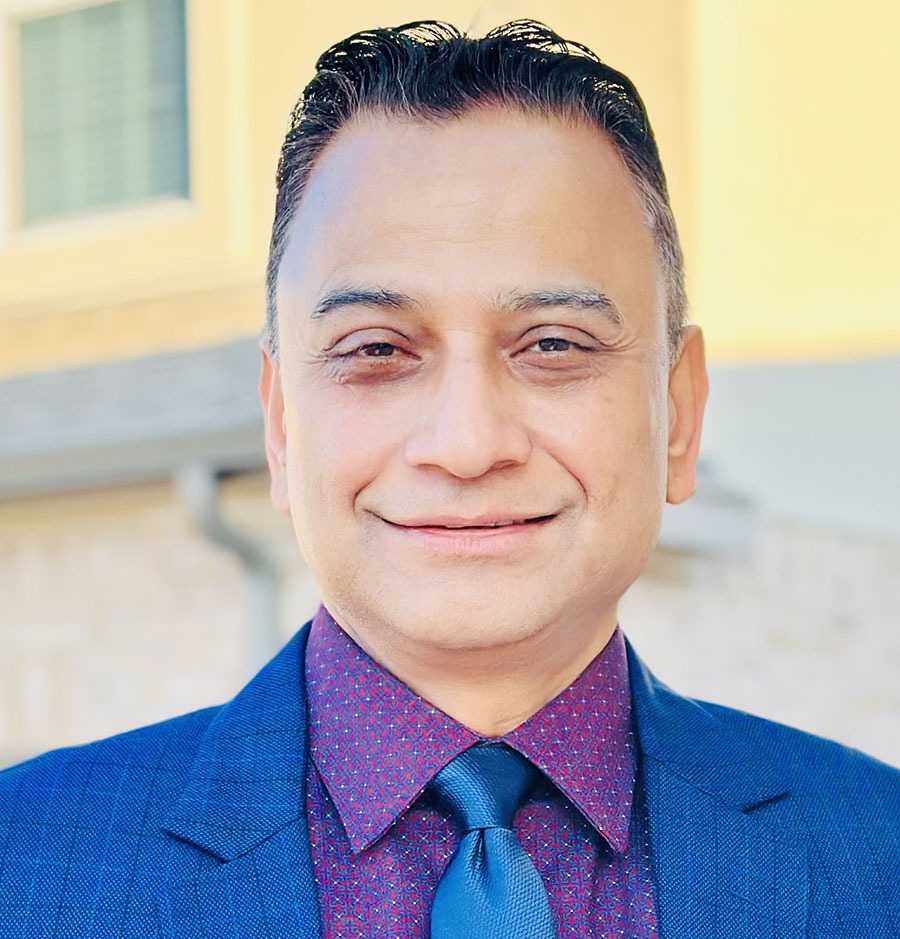
Dr. Buddhi R. Gyawali is a Professor of geospatial applications, human dimensions of natural resources, and Climate at Kentucky State University (KSU) since 2012 and serves as the Lead Scientist of the Center for Geospatial Intelligence & Environmental Security. Dr. Gyawali currently teaches Introduction to GIS, Climate Change Studies, and Remote Sensing of the Environment to graduate and undergraduate students, as well as Special Topics in Advanced Geospatial Analysis, Modeling, and Research. He is also the Coordinator of the M.S. in Environmental Studies Program and Director of KSU’s Summer Apprenticeship Program (SAP), where he supports student research training and workforce development.
Dr. Gyawali holds a B.S. in Agricultural Sciences (Tribhuvan University, Nepal), an M.A. in International Development (Clark University, Massachusetts), an M.S. in Agribusiness Management, and a Ph.D. in Plant and Soil Sciences (Alabama A&M University). He is also a graduate of LEAD21 (Class 17), a nationally recognized leadership program focused on advancing leadership in food and agricultural systems.
His expertise spans GIS, remote sensing, geospatial modeling, land-use/land-cover change, watershed science, and ecosystem monitoring, with a strong emphasis on coal-mine-dominated landscapes and restoration research in Eastern Kentucky. Dr. Gyawali has led and contributed to major externally funded projects supported by NSF, DOE, and USDA, and has produced extensive scholarly outputs, including 45+ peer-reviewed publications and numerous conference papers and posters. He has received over $14.3 million in different grants. These grants have been instrumental in designing and implementing major STEM curricula, minor and certificate programs in Geospatial Technology Application, classroom methods, laboratory instrumentation, and generating research stipends for undergraduate and graduate students.
Dr. Gyawali has received multiple honors, including recognition for service to the Kentucky GIS/Mapping community and awards for excellence in research and teaching. Through interdisciplinary collaboration, teaching, and mentoring, he continues to strengthen geospatial capacity, environmental research impact, and student success at Kentucky State University.