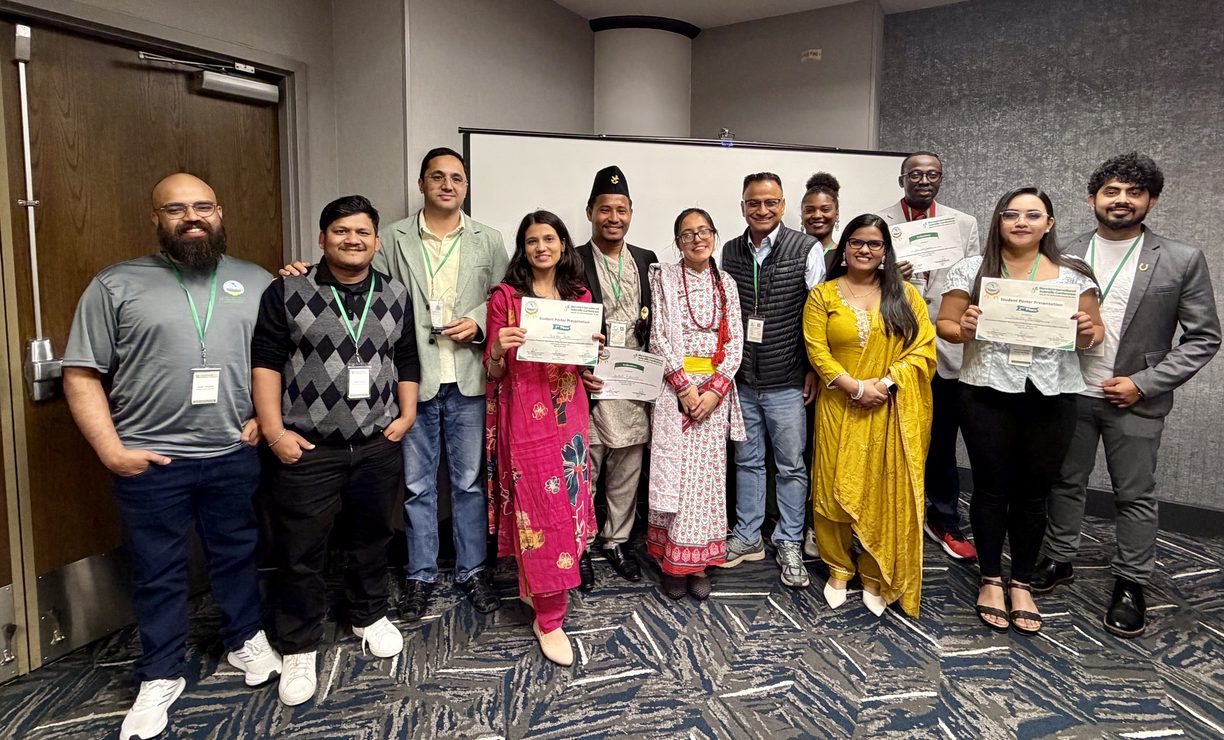
Conference highlights student presentations, international engagement, and workforce
development partnerships connected to the University’s Land-Grant mission
FRANKFORT, Ky. — A 19-member delegation from Kentucky State University’s College of
Agriculture, Health, and Natural Resources helped advance conversations on agricultural
innovation, global learning, and workforce development during the 5th Biennial International
Scientific Conference of the Association of Nepalese Agricultural Professionals of
the Americas.
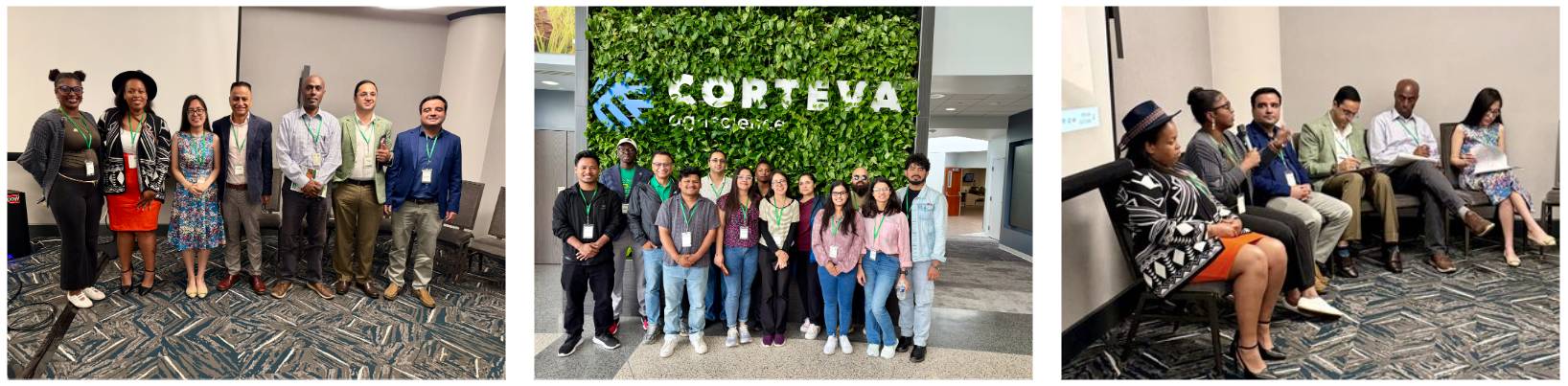
The conference, held May 26-28 in Indianapolis, brought together scientists, researchers, policymakers, entrepreneurs, students, and professionals under the theme “RAISE 2026: Resilient Agriculture through Innovation, Science and Education.” The hybrid event included keynote addresses, technical sessions, student oral and poster presentations, panel discussions, networking opportunities, a cultural gala, and a visit to Corteva Agriscience focused on industry innovation and agricultural career pathways.
Kentucky State was represented by seven faculty members, nine students, and three staff members, with 17 participants attending in person and two participating virtually.
 Dr. Marcus Bernard, dean of the College of Agriculture, Health, and Natural Resources
and director of Land Grant Programs, served as a keynote speaker. His presentation,
“1890 Land-Grant Universities: Legacy & Opportunities for Agricultural Workforce Development
and Innovation,” highlighted the role of 1890 institutions in agricultural education,
research, international collaboration, and workforce preparation.
Dr. Marcus Bernard, dean of the College of Agriculture, Health, and Natural Resources
and director of Land Grant Programs, served as a keynote speaker. His presentation,
“1890 Land-Grant Universities: Legacy & Opportunities for Agricultural Workforce Development
and Innovation,” highlighted the role of 1890 institutions in agricultural education,
research, international collaboration, and workforce preparation.
Other faculty participants included Dr. Maheteme Gebremedhin, Dr. Buddhi Gyawali, Dr. Suraj Upadhaya, Dr. Anuj Chiluwal, Dr. Manisha Parajuli, and Dr. Sait Sarr. Student participants included Dashanta Gray, Shaneice Brown, Anjan Timilsina, Surekha Panthi, Jonish Chand, Shristi Adhikari, Srijana Kandel, Akanksha Gautam, and Habeeb Oyewo. Staff participants included Santosh Rajbanshi, Shreesha Pandeya, and Sudip Poudel.
Dr. Gyawali led a special panel session, “Connecting the Continents: Interfacing Traditions, Science, and Education for Resilient Global Agriculture and Competent Workforce Development.” The session featured Kentucky State faculty and students reflecting on recent experiential learning and research engagement in Nepal and Peru.
Panelists discussed how international learning experiences can broaden students’ understanding of agriculture, culture, food systems, and community resilience.
“Such international engagement is not simply about visiting another place; it is about building relationships, broadening perspective, and bringing those lessons back into our own communities,” Brown said.
Gray said her experience in Peru helped her think more deeply about food access, food choices, and global food systems.
“One of the most eye-opening aspects of the experience was seeing the differences in food availability and food choices between the United States and Peru,” Gray said. “It made me reflect on how we often have access to many options but do not always make healthy choices, while for others, those choices may not even be available.”
Adhikari, who served as discussant for the panel, said student reflections can help others envision the value of global engagement.
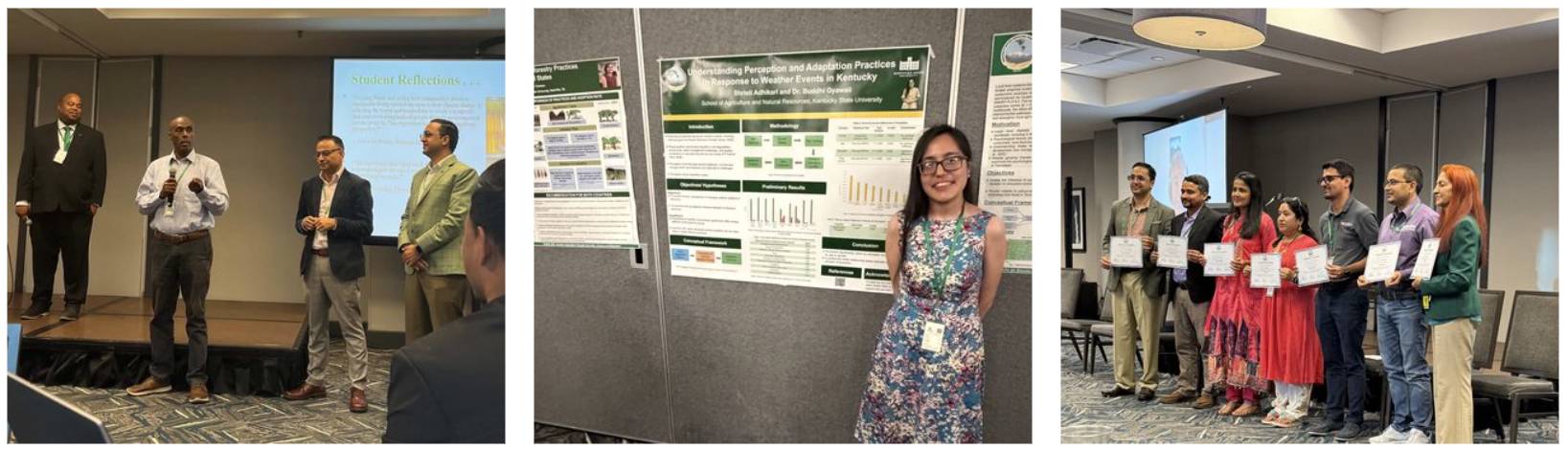
“Experiential learning extends far beyond the classroom,” Adhikari said. “When students share their stories and reflections, they help others envision the possibilities of global engagement and create connections that inspire future participation.”
Dr. Gyawali said global collaboration strengthens research and education by connecting local knowledge with shared scientific challenges.
“Global collaboration is essential for tackling the interconnected challenges of our time,” Dr. Gyawali said. “By bringing together shared experiences from places like the Cusco region of Peru and the Himalayas, we not only enrich our research but also co-create solutions that are locally grounded and globally relevant.”
Students also presented research through oral and poster sessions addressing agriculture, natural resources, sustainability, and community development. Timilsina presented research on soybean performance across planting dates and maturity groups.
“I had an enriching experience presenting my research, receiving constructive feedback directly from researchers, and learning more about current advancements in agricultural science,” Timilsina said.
Several Kentucky State participants earned recognition during the conference. Dr. Upadhaya received the Early Career Scholar Award for his research, scholarly contributions, and dedication to academic excellence. He also was elected to serve a two-year term as a NAPA executive member.
Shreesha Pandeya, research associate, won second place for “Barrels, Barriers, and Trade-offs: Navigating Sustainability Transitions in Kentucky’s Bourbon Industry.” Surekha Panthi, graduate research assistant and M.S. Environmental Studies student, received third place for “Optimizing Late-Season Nitrogen Fertilization for Improved Soybean Yield and Seed Composition.”
“Receiving the Best Poster Presentation Award was a proud moment, but even more meaningful was the opportunity to represent Kentucky State,” Pandeya said.
Panthi said the conference offered both professional and personal value.
“Attending the NAPA conference was a wonderful opportunity to share my research and connect with professionals,” Panthi said. “What made it truly unforgettable was the community’s profound cultural warmth, which beautifully reminded me of my home country, Nepal.”
Dr. Sarr served as a judge for student presentations, and Kentucky State students and staff also contributed to the conference through volunteer and support roles.
NAPA is a partner in Kentucky State’s USDA NextGEN project led by Dr. Gyawali, “Generating and Sustaining the Next Generation of the Food, Agriculture, Natural Resources, and Human Sciences Workforce through International Experiential Learning, Outreach and Engagement.” Through the partnership, NAPA has assisted Kentucky State with degree-program assessment and with development of a career manual to help students prepare for food, agriculture, natural resources, and related careers in the United States and abroad.
Students from Kentucky State and NextGEN partner universities, including Florida A&M University, Southern University, and the University of Maryland Eastern Shore, have used the manual to prepare for internships and career opportunities.
Support for conference travel was provided by USDA Evans-Allen funds and in part through Dr. Gyawali’s USDA NextGEN project, Kentucky State award no. UMES/NEXTGEN/Kentucky-01-5208630, USDA award no. 2023-70440-40145.
Additional Resource: Watch highlights from students’ immersive learning experiences in Nepal and Peru: Nepal Peru Trip Panel Video