Two Kentucky State-led papers examine how plant-based remediation strategies could
support long-term environmental management of coal combustion byproducts.
FRANKFORT, Ky. — What power plants leave behind could become the starting point for
a cleaner approach to restoring contaminated land.
Two recent peer-reviewed papers led by Santosh Rajbanshi, a December 2025 Master of
Environmental Studies graduate of Kentucky State University, examine fly ash management
and the potential use of plants and soil amendments to help address soils affected
by coal combustion byproducts. Both papers were produced through a three-year U.S.
Department of Energy-funded project focused on fly ash management.
 Fly ash, a fine material produced when coal is burned for energy, can contain potentially
toxic elements that affect soil, water, plant health, and broader ecosystems. Traditional
cleanup methods can be costly and disruptive, prompting researchers to study phytoremediation,
a plant-based approach that uses selected species to extract, stabilize, or reduce
the movement of contaminants in soil.
Fly ash, a fine material produced when coal is burned for energy, can contain potentially
toxic elements that affect soil, water, plant health, and broader ecosystems. Traditional
cleanup methods can be costly and disruptive, prompting researchers to study phytoremediation,
a plant-based approach that uses selected species to extract, stabilize, or reduce
the movement of contaminants in soil.
The review paper, “Phytoextraction of Heavy Metals from Fly-Ash-Contaminated Soils: A Review,” provides a comprehensive examination of fly ash production in the United States,
the environmental challenges associated with fly ash-contaminated soils, and the potential
of phytoextraction as a sustainable remediation strategy.
The paper also reviews how certain plant species can absorb and accumulate potentially
toxic elements in their aboveground biomass. That process, known as phytoextraction,
may offer a lower-cost and less disruptive option for long-term site restoration when
paired with careful plant selection, soil management, and biomass disposal strategies.
“Fly ash management is not only a disposal issue; it is a long-term soil, water, and
land-use issue,” Rajbanshi said. “Our work looks at how plant species and soil amendments
can be matched to different remediation goals, whether that means extracting potentially
toxic elements or stabilizing them so they are less mobile.”
A second paper, “Effects of biochar amendment on the phytoextraction of twenty potentially toxic elements
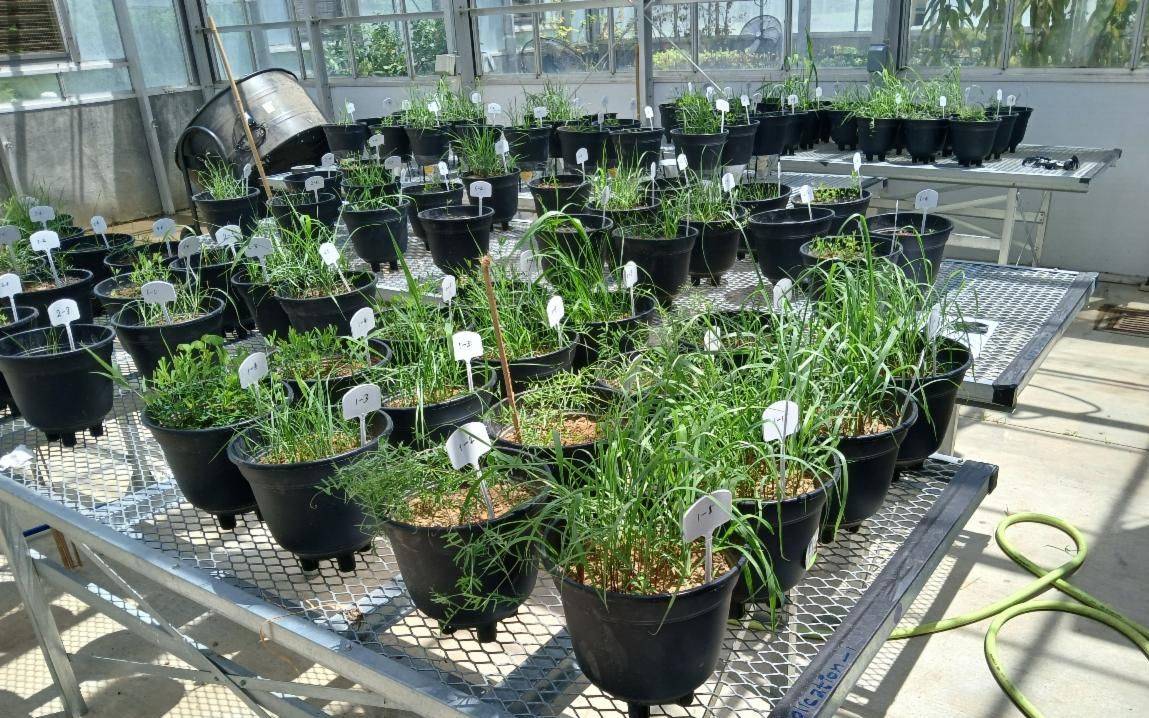
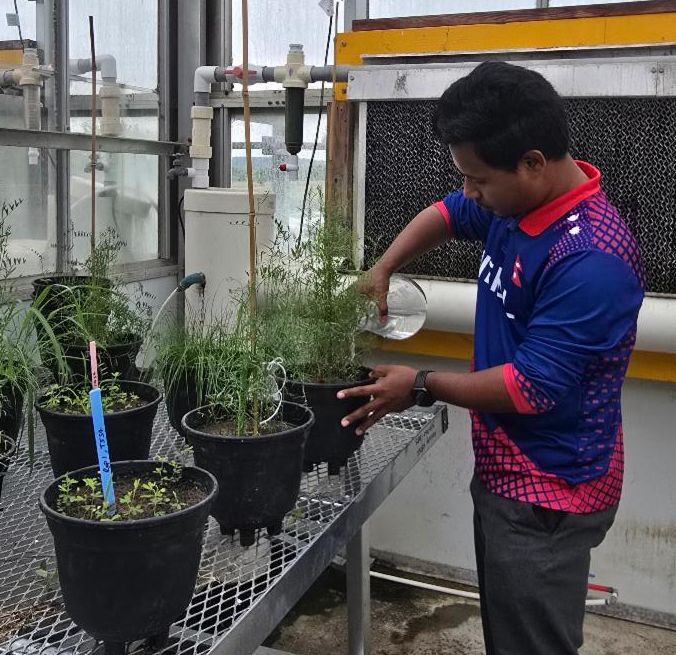
in fly ash contaminated soils,” reports results from a Kentucky State greenhouse study conducted at the Harold R.
Benson Research and Demonstration Farm. Researchers tested switchgrass, tall fescue,
hairy vetch, and sericea lespedeza in soils amended with fly ash and biochar.
The study found that fly ash reduced plant biomass, while biochar improved root and
shoot growth. However, biochar also reduced the accumulation of potentially toxic
elements in plant shoots, suggesting it may be more useful for stabilizing contaminants
in soil than for phytoextraction projects designed to remove them through harvested
plant biomass.
The results also showed differences among plant species. Grasses, including switchgrass
and tall fescue, produced stronger biomass under the study conditions, while tall
fescue and hairy vetch showed promise for accumulating certain elements. Researchers
noted that additional field-based studies are needed to determine how these findings
translate to larger-scale remediation settings.
Dr. Maheteme Gebremedhin, project lead and chair of the School of Agriculture and
Natural Resources, said the publications reflect the University’s applied research
mission.
“This project demonstrates the kind of environmental research Kentucky State is positioned
to lead as an 1890 land-grant university,” Gebremedhin said. “By studying fly ash-contaminated
soils under controlled conditions and reviewing evidence from across the field, our
team is building knowledge that can support future decisions about site restoration
and environmental management.”
The papers were authored by Kentucky State researchers in collaboration with James
C. Hower of the University of Kentucky Center for Applied Energy Research and Department
of Earth and Environmental Sciences.
The project was funded by the National Energy Technology Laboratory under the U.S.
Department of Energy, Award No. DE-FE0032197.