Two peer-reviewed studies examine biological nitrogen fixation, drought conditions,
and context-specific fertilizer management
FRANKFORT, Ky. — Soybean is different from many other major crops because it can partner
with soil bacteria to produce much of the nitrogen it needs.
That biological advantage can reduce the need for added fertilizer, but it also raises
a practical management question: When does supplemental nitrogen help, and when does
it simply add cost without improving yield?
 Two recent peer-reviewed publications from Kentucky State University examine that
question from two perspectives. One study tests supplemental nitrogen applications
under Kentucky rainfed field conditions. A companion review examines biological nitrogen
fixation in soybean and how the process supports productivity, sustainability, and
future crop improvement.
Two recent peer-reviewed publications from Kentucky State University examine that
question from two perspectives. One study tests supplemental nitrogen applications
under Kentucky rainfed field conditions. A companion review examines biological nitrogen
fixation in soybean and how the process supports productivity, sustainability, and
future crop improvement.
The studies were led by Manish Pandit under the mentorship of Dr. Anuj Chiluwal, assistant
professor of agronomy at Kentucky State. Dr. Chiluwal served as corresponding author
on both papers.
Together, the publications reinforce the importance of context-specific nitrogen management,
especially in rainfed, drought-prone, and low- to moderate-yield environments.
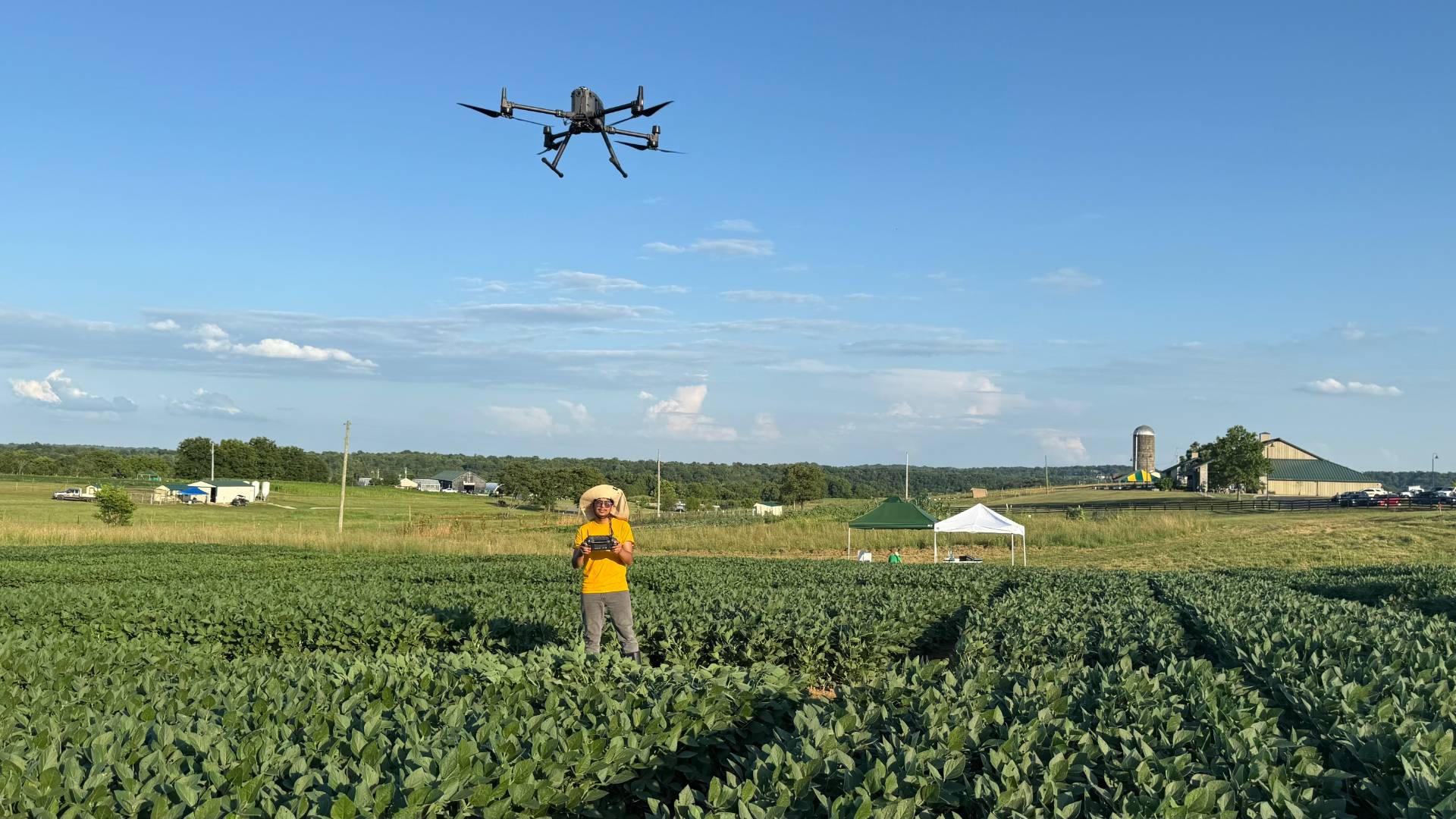
The field study reported results from a two-year experiment at Kentucky State’s Harold
R. Benson Research and Demonstration Farm. Pandit evaluated supplemental nitrogen
applications at different reproductive stages in soybean under rainfed conditions.
Across two growing seasons marked by extended dry periods during pod formation and
seed filling, the team found no significant benefit from a single nitrogen application
on plant growth, yield, or seed composition.
“From a farmer’s perspective, the message is clear,” Pandit said. “Under drought-prone
and low- to moderate-yield conditions like we saw in our trials, nitrogen top dressing
during reproductive stages is unlikely to provide a positive return or pay for itself.
The crop already relies heavily on nitrogen fixation and internal nitrogen cycling,
and without adequate moisture, extra fertilizer simply does not translate into increased
yield or quality.”
Dr. Chiluwal said the findings reinforce the need to avoid one-size-fits-all fertilizer
recommendations.
“Many earlier studies that reported strong responses used higher nitrogen rates, split
nitrogen applications, or fully irrigated environments,” Dr. Chiluwal said. “Our work
shows that in a typical rainfed field where water is a major limiting factor, late-season
nitrogen is not the ultimate solution. It reinforces why blanket nitrogen fertilizer
recommendations for soybean do not work across all environments.”
Pandit’s second paper, “Biological Nitrogen Fixation in Soybean: Mechanisms, Benefits,
Sustainability, and Future Prospects,” takes a broader view of how soybean plants
rely on their symbiotic relationship with Bradyrhizobium to support productivity and
sustainability.
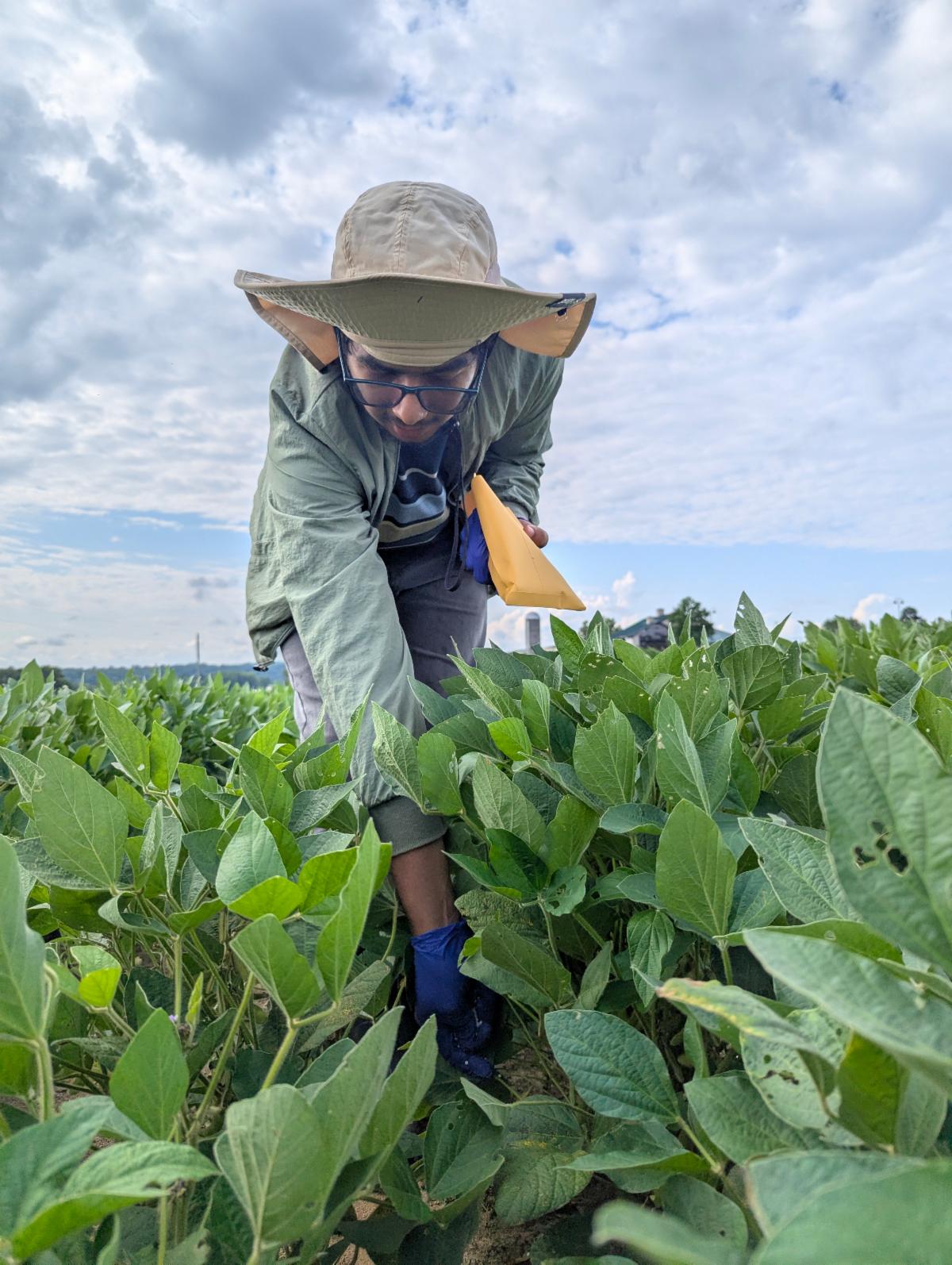
The review notes that well-nodulated soybean typically derives about 50 to 70 percent
of its nitrogen from biological nitrogen fixation during the growing season. That
process can reduce reliance on energy-intensive synthetic fertilizers, lower greenhouse
gas emissions, and leave nitrogen credits for crops that follow soybean in rotation.
 At the same time, the review explains that modern high-yielding soybean cultivars
can experience a nitrogen gap when crop demand during peak reproductive growth exceeds
what biological nitrogen fixation and soil nitrate can supply. In those cases, targeted
nitrogen supplementation may be justified, particularly in high-yield systems where
fertilizer complements the plant’s natural nitrogen-fixing capacity rather than suppressing
it.
At the same time, the review explains that modern high-yielding soybean cultivars
can experience a nitrogen gap when crop demand during peak reproductive growth exceeds
what biological nitrogen fixation and soil nitrate can supply. In those cases, targeted
nitrogen supplementation may be justified, particularly in high-yield systems where
fertilizer complements the plant’s natural nitrogen-fixing capacity rather than suppressing
it.
“In most low- to moderate-yield situations, well-managed nodulation and soil nitrate
are enough, and extra fertilizer often just replaces what the plant would have fixed
on its own,” Pandit said. “But as breeders push higher yields, crop demand can exceed
the biological supply. Our review emphasizes that we have to close that gap in ways
that do not hurt nodulation or create more environmental problems.”
Dr. Chiluwal said pairing the field study with a global synthesis was intentional.
“The field study gives us a very concrete, producer-relevant context showing why nitrogen
applications may not be useful under low-yielding and drought-stressed conditions,”
he said. “The review reminds us that the real long-term leverage comes from strengthening
biological nitrogen fixation and then using nitrogen fertilizer only when it truly
complements, rather than competes with, the soybean plant’s natural symbiosis.”
Pandit recently completed his master’s degree at Kentucky State. The publications
follow a strong finish to his graduate work at Kentucky State, where he successfully
defended his master’s thesis and was recognized as an Outstanding Graduate Student
by the School of Agriculture and Natural Resources.
Pandit published “Impact of supplemental nitrogen application at different reproductive stages on soybean
yield and seed composition” in the Journal of Agriculture and Food Research. He also published “Biological Nitrogen Fixation in Soybean: Mechanisms, Benefits, Sustainability, and
Future Prospects” in Agronomy, and the article was selected as the cover story for the journal issue.
Co-authors on the field study include Anjan Timilsina, graduate research assistant;
Dr. Theoneste Nzaramyimana, assistant professor for urban agriculture; and Dr. Suraj
Upadhaya, assistant professor of sustainable systems. Surekha Panthi, graduate research
assistant, co-authored the review article.
Both studies were supported by a USDA-NIFA 1890 Capacity Building Grant (Award Number
2023-38821-39960) and a USDA-NIFA Evans-Allen Grant (Accession Number: 7004460).