Kentucky State seminar series connects landowners, students, Extension professionals,
stakeholders, researchers, and partners with practical management strategies
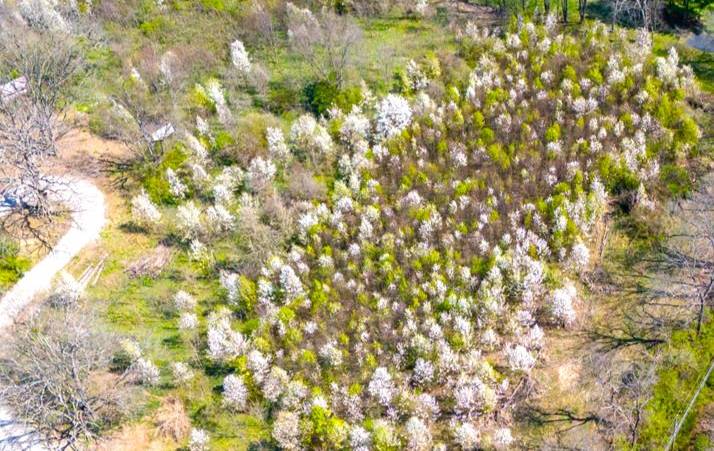
FRANKFORT, Ky. — Unwanted species are taking root across Kentucky forests, crowding
out native vegetation, weakening wildlife habitat, and driving up management costs
for landowners.
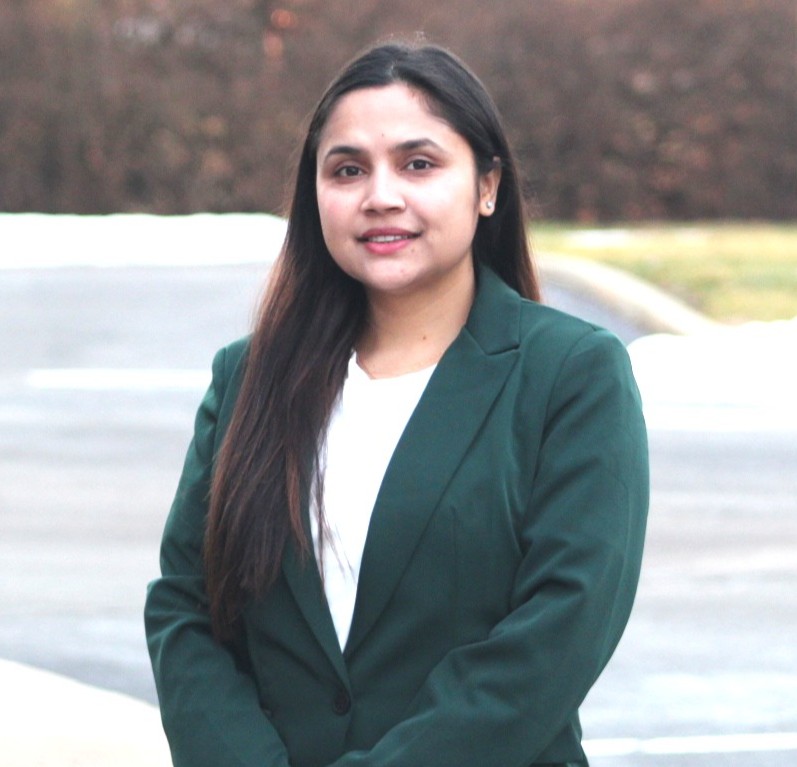 To help address those impacts, Dr. Manisha Parajuli, assistant professor of forestry
at Kentucky State University, has launched a Seminar Series, a virtual program connecting
landowners, students, Extension professionals, and researchers with practical guidance
in forestry and natural resources management.
To help address those impacts, Dr. Manisha Parajuli, assistant professor of forestry
at Kentucky State University, has launched a Seminar Series, a virtual program connecting
landowners, students, Extension professionals, and researchers with practical guidance
in forestry and natural resources management.
The series opened May 1 with “Invasion of the Biome Snatchers,” a session focused
on forest health and the ecological and economic challenges caused by species such
as Callery pear, commonly known as Bradford pear.
“Invasive plant species management is a significant challenge in Kentucky because
invasive plants can severely impact forest ecosystems, biodiversity, and long-term
forest health,” Dr. Parajuli said. “Through events like this, I aim to provide landowners
and farmers with practical management strategies, help students connect with faculty
and experts from other institutions, and support future collaboration opportunities
for Kentucky State faculty and Extension professionals.”
The first seminar drew 38 participants, including faculty members, local landowners,
foresters, Extension staff, and graduate and undergraduate students.
The session featured Dr. Jessica Hartshorn, associate research professor of forestry
at Central State University in Wilberforce, Ohio. Dr. Hartshorn studies the impacts
of invasive species on forest health and resilience.
A major focus of the session was Callery pear, which was introduced from Asia and
became widely planted in residential and commercial landscapes for its white flowers
and ornamental appeal. Over time, however, Callery pear has spread aggressively into
natural areas, where it can outcompete native plants and complicate forest management.
 Dr. Hartshorn emphasized that cutting Callery pear alone is often ineffective because
the tree can resprout, making repeated treatment and integrated management approaches
important. Participants also discussed strategies for managing and utilizing removed
Callery pear trees, as well as how the species affects pollinator communities.
Dr. Hartshorn emphasized that cutting Callery pear alone is often ineffective because
the tree can resprout, making repeated treatment and integrated management approaches
important. Participants also discussed strategies for managing and utilizing removed
Callery pear trees, as well as how the species affects pollinator communities.
Dr. Kahan Tyrell, associate Extension administrator at Kentucky State, said Dr. Parajuli’s
launch of the seminar series reflects the University’s commitment to connecting research,
Extension, and community needs.
“The ‘Invasion of the Biome Snatchers’ seminar provided timely, practical insight
into managing invasive species like Callery pear,” Dr. Tyrell said. “Dr. Jessica Hartshorn
effectively translated research into actionable strategies for landowners and Extension
professionals. Equally important, this program highlights the value of strong institutional
collaborations in advancing science-based solutions and expanding our collective impact
across the region.”
The session also provided value for students preparing for careers in natural resources,
agriculture, and environmental fields.
“We need more events like this because they help us learn beyond what is offered in
regular classes,” said Ashmita Bhandari, a Kentucky State graduate student. “It also
gives us the opportunity to learn from faculty at other universities, understand their
research, and reach out to them for future opportunities.”
Participants suggested future seminar topics including agroforestry, organic farming,
precision agriculture, restoration ecology, wildlife habitat, forest technologies,
and soil and water resources management.
Dr. Parajuli plans to continue developing seminar opportunities based on participant
interest to support forestry and natural resources education, Extension outreach,
and collaborative research at Kentucky State.