Research led by Dr. Avinash M. Tope and co-authored by pawpaw research leader Dr.
Kirk W. Pomper explores a two-pronged strategy to weaken lung cancer cells by restricting
how they generate energy
FRANKFORT, Ky. — A surprising intersection of Kentucky State University’s pawpaw research
and cancer science is highlighted in a newly published study focused on disrupting
how tumor cells produce and manage energy.
Led by Dr. Avinash M. Tope, associate dean and associate professor of human nutrition
and food safety, the Kentucky State team examined a “two-pathway” approach aimed at
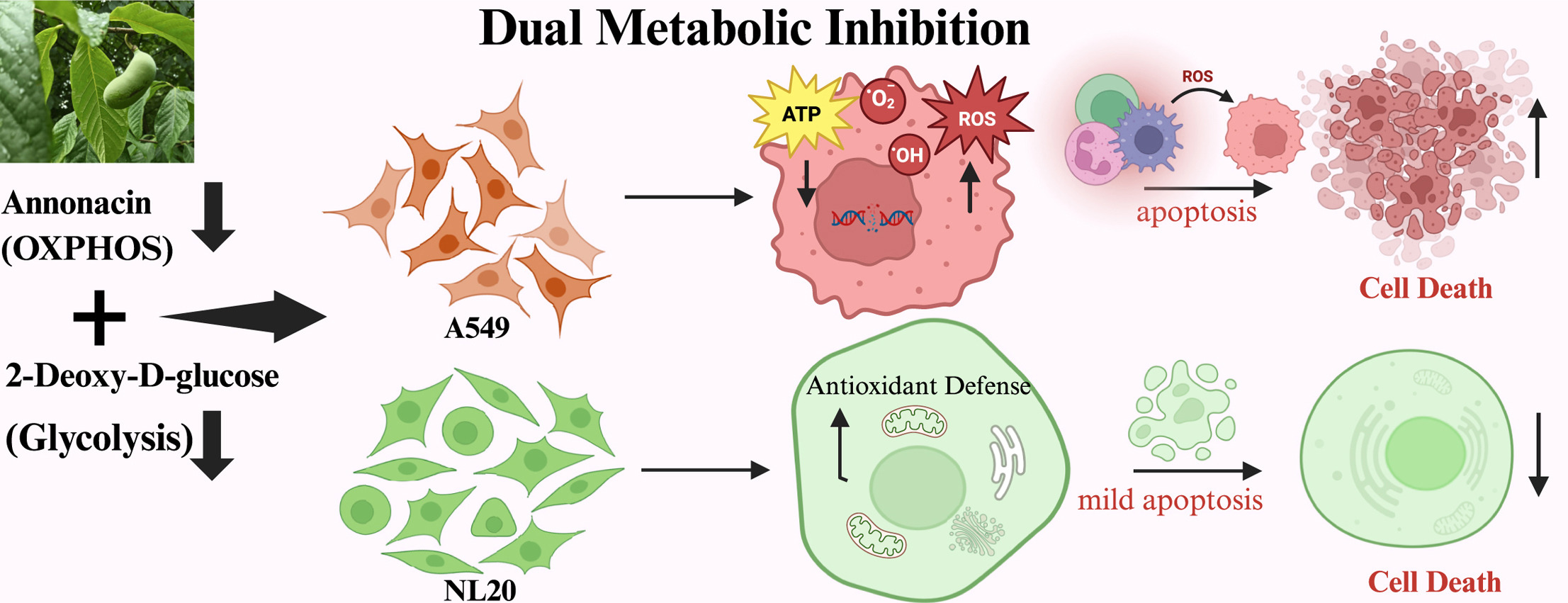
weakening cancer cells by limiting the ways they generate fuel. In laboratory testing,
the researchers evaluated annonacin, a plant-derived compound associated with the
same botanical family as the North American pawpaw, alongside 2-deoxy-D-glucose, known
as 2-DG, a compound commonly used in research to restrict how cells use glucose. Together,
the two compounds reduced lung cancer cell growth more than either compound alone.
“Cancer cells are resourceful,” Dr. Tope said. “If you pressure one energy pathway,
they can often compensate using another. Our findings support continued investigation
into strategies that apply pressure from more than one direction, while keeping a
careful focus on dose, safety, and what the evidence can responsibly support.”
The “pawpaw twist” is not a dietary claim and not a clinical treatment. It reflects
Kentucky State’s depth in natural-products research built through its land-grant work
on pawpaw — research that has helped the University understand compounds produced
by pawpaw and related plant species, and how those compounds behave under controlled
conditions.
 That foundation is closely tied to Dr. Kirk W. Pomper, professor of horticulture,
a co-author on the study, and one of the nation’s best-known experts on pawpaw production
and cultivar development. Pomper has helped establish Kentucky State as a recognized
center for pawpaw research and outreach, supporting growers and advancing understanding
of the fruit’s characteristics, value-added potential, and underlying chemistry.
That foundation is closely tied to Dr. Kirk W. Pomper, professor of horticulture,
a co-author on the study, and one of the nation’s best-known experts on pawpaw production
and cultivar development. Pomper has helped establish Kentucky State as a recognized
center for pawpaw research and outreach, supporting growers and advancing understanding
of the fruit’s characteristics, value-added potential, and underlying chemistry.
“Pawpaw research is often associated with agriculture, entrepreneurship, and food
innovation,” Dr. Pomper said. “This paper shows how that same scientific base can
contribute to broader questions — so long as we stay grounded in rigorous methods
and avoid overstating what early-stage results mean.”
The study focused on non-small cell lung cancer, or NSCLC, and used widely recognized
laboratory models to compare outcomes in cancer cells and non-malignant bronchial
cells. In addition to reductions in cell growth, the researchers report patterns consistent
with increased cellular stress when both energy pathways were pressured at once.
The team also highlights a critical guardrail: at certain dose ranges, effects in
non-malignant cells were comparable to effects in cancer cells, underscoring the need
for additional work on dose refinement, delivery strategies, and safety-focused follow-on
studies.
Co-authors include Kentucky State graduate researcher Bhoj Raj Bhattarai and land-grant
research and Extension associate Cora Teets.
The journal’s impact factor is 6.3 and the authors acknowledge support from USDA NIFA
Evans-Allen, Project No. 7001005.
Read the article: “Comparative evaluation of annonacin and 2-Deoxy-D-glucose on lung
adenocarcinoma and normal bronchial cells: Differential effects on viability, proliferation
and antioxidant defense,” Journal of Agriculture and Food Research, Volume 25 (February 2026), Article 102520 — https://www.sciencedirect.com/science/article/pii/S2666154325008919.