Thorobred Trail conservation project highlights applied land-grant work in action.
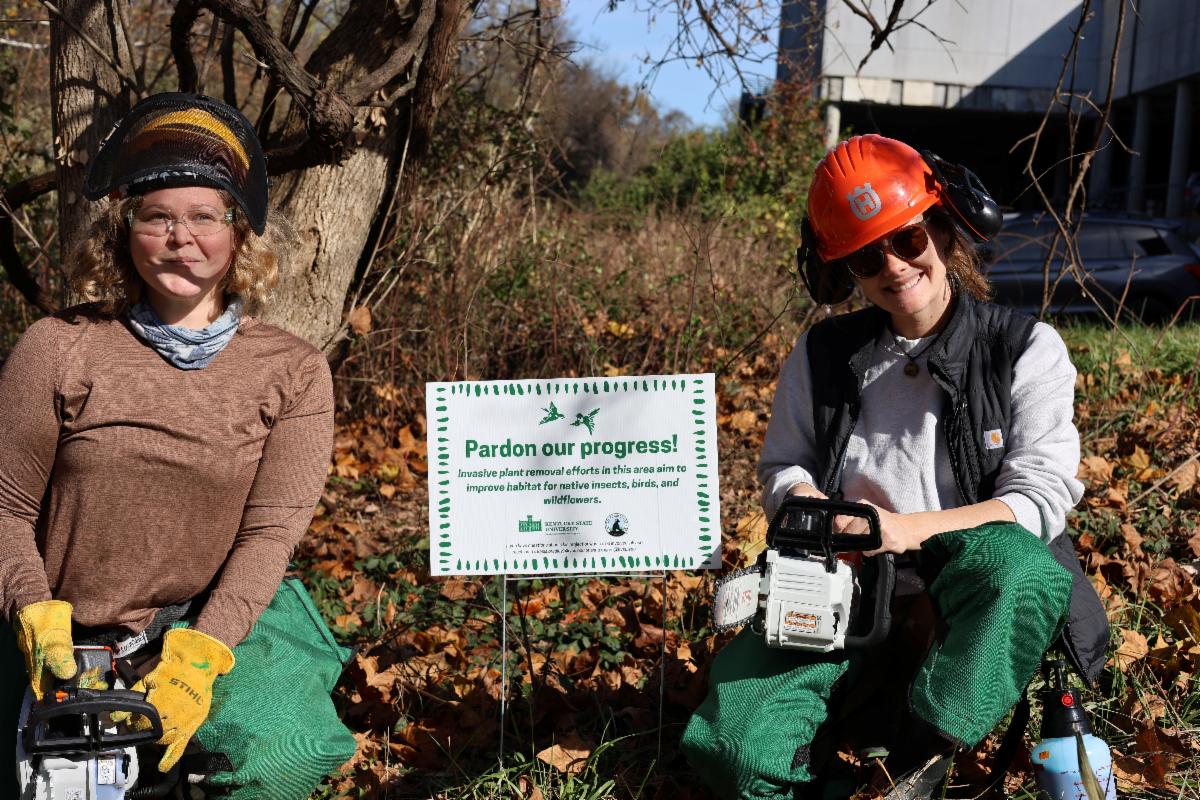
FRANKFORT, Ky. — The steady, behind-the-scenes work of Kasia Bradley and Anna Claire
Rogers is making the Thorobred Trail a better home for woodpeckers and other native
birds—one nest box at a time.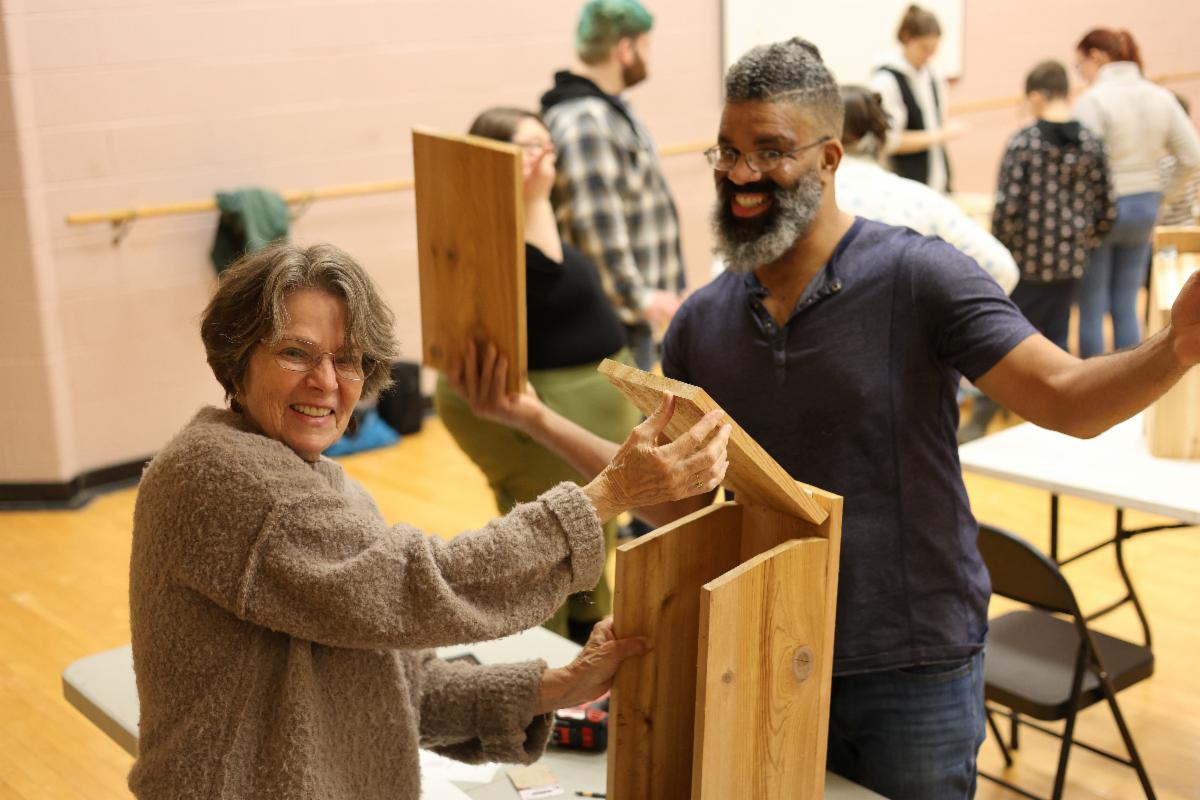
Both Bradley and Rogers serve as Extension Associates for Kentucky State University’s
land-grant program and have played central roles in a conservation initiative focused
specifically on the Thorobred Trail. Their hands-on work includes installing purpose-built
nest boxes, removing invasive plant species, and even clearing areas with chainsaws
to restore native vegetation and improve habitat for cavity-nesting birds in a highly
visible and heavily used campus natural area.
The project was recently featured in a story by the Kentucky Lantern, which documented
how targeted, low-cost interventions can address the decline of natural nesting sites
such as standing dead trees, or “snags,” in managed landscapes. The nest boxes replicate
those natural cavities and are designed to support species such as the red-headed
woodpecker.
“This work is about paying attention to what the landscape is missing and responding
in a way that supports wildlife while also educating people,” Bradley said. “The Thorobred
Trail gives us a place where stewardship and learning can happen side by side.”
Rogers emphasized the value of sustained, place-based care. “The nest boxes are important,
but so is the surrounding habitat,” she said. “Removing invasive species and restoring
native plants helps rebuild the ecological systems these birds depend on.”
The Thorobred Trail, a public greenway that winds through campus woodlands, serves
as both a recreational asset and an outdoor classroom. More information about the
trail is available at https://www.frankfort.ky.gov/1921/Thorobred-Trail.
The trail-based work is part of Kentucky State University’s broader commitment to
environmental stewardship across its approximately 1,000-acre footprint, which includes
the Harold A. Benson Research and Demonstration Farm, the Aquaculture Research Center,
the West Farm, and the Environmental Education and Research Center. Together, these
sites support applied learning, research, and outreach aligned with the University’s
land-grant mission.
Early observations indicate increased woodpecker activity near several nest box sites,
reinforcing the value of consistent, hands-on habitat work. Bradley and Rogers continue
to monitor the boxes and surrounding areas as restoration efforts progress.
This work has been made possible through generous support from the National Wildlife
Federation, which provided grant funding to help advance campus-based conservation
for vulnerable species.
Read the full Kentucky Lantern story at:
https://kentuckylantern.com/2025/12/25/making-a-kentucky-campus-a-better-home-for-woodpeckers-one-box-at-a-time/