FRANKFORT, Ky. — From digital contracts to new biofuel markets, Kentucky State University
students are reimagining how U.S. soybeans move from field to consumer. Their innovative
outlook on this crucial component of the food ecosystem earned two Kentucky State
teams first and second place in the 2025 Global Agriculture & Agribusiness Case Study
Competition.
The 2025 Global Agriculture & Agribusiness Case Study Competition was held during
the 83rd Professional Agricultural Workers Conference (PAWC), Nov. 16–18, in Montgomery,
Alabama. PAWC serves as a leading national forum promoting equitable access to information,
technology, and opportunities that advance sustainable community and natural resource
development.
The first-place team — Godswill Ujah, Bennett Jordan, Taliyah Walker, and Maryam Adeniyi
— presented an innovative case study titled “The Commodity Contract Token (CCT): A
New Strategy for U.S. Soybean.”
In their winning work, the students outlined a trust-driven digital mechanism designed
to strengthen the U.S. soybean industry by targeting two rapidly expanding markets:
traceability and quality assurance. By leveraging digital tokens to verify origin,
handling, and product quality, the team’s concept seeks to give producers and buyers
greater confidence in supply chains while enhancing the global competitiveness of
U.S. soybeans.
The second-place team — Emmanuel Obielodan, Ghani Shittu, Ayodola Olatunji, and Oluwafunmisho
Ibiloro — was honored for its case study, “Tariffs and Trade Impacts on the U.S. Soybean
Market: Solutions for U.S. Farmers During a Trade War.”
In that analysis, the team recommends fortifying domestic supply chains, increasing
soybean processing capacity, and expanding biofuel production as viable long-term
strategies for U.S. farmers navigating global trade disruptions.
Both Kentucky State teams received award certificates and prizes, including cash awards
and international travel opportunities. Tuskegee University received the third-place
award.
In addition to the competition, several Kentucky State students showcased their scholarship
through oral and poster presentations during the conference, further highlighting
the university’s growing strength in agricultural research, economics, and policy.
Kentucky State’s delegation to PAWC was led by Dr. Marcus Bernard, dean of the College
of Agriculture, Health, and Natural Resources and director of Land Grant Programs,
and included senior research scientist Dr. Sait Sarr; Kristel Smith, director of research
and economic development, who served as team coach; and Dr. Siddhartha Dasgupta, associate
research director for the Land Grant Program and professor of aquaculture.
Reflecting on the accomplishment, Sarr said the students’ success underscores both
their potential and the power of sustained faculty support.
“This achievement would not have been possible without the dedicated support of Ms.
Smith and the extraordinary effort our students put into refining their work,” Sarr
said. “The Kentucky State student body holds immense potential that can be fully realized
with continued collaboration and support. We are proud of their success and grateful
for the contributions of our faculty and leadership who made this opportunity possible.”
“These case studies are more than classroom exercises; they are a training ground
for the next generation of scientists, economists, and problem-solvers who will safeguard
our food supply,” Bernard said. “As an 1890 land-grant institution, Kentucky State
is committed to mentoring students who can translate research into real-world solutions
for producers and communities.”
A team of faculty mentors supported the students’ work, including Dr. Anuj Chiluwal,
assistant professor of agronomy; Swagata “Ban” Banerjee, professor of economics in
the School of Business; Dr. James Obielodan, professor of management information systems
in the School of Business; Dr. Frederick Bebe, assistant research professor and principal
investigator in Cooperative Extension; and Dr. Gladys Besona, research and extension
associate.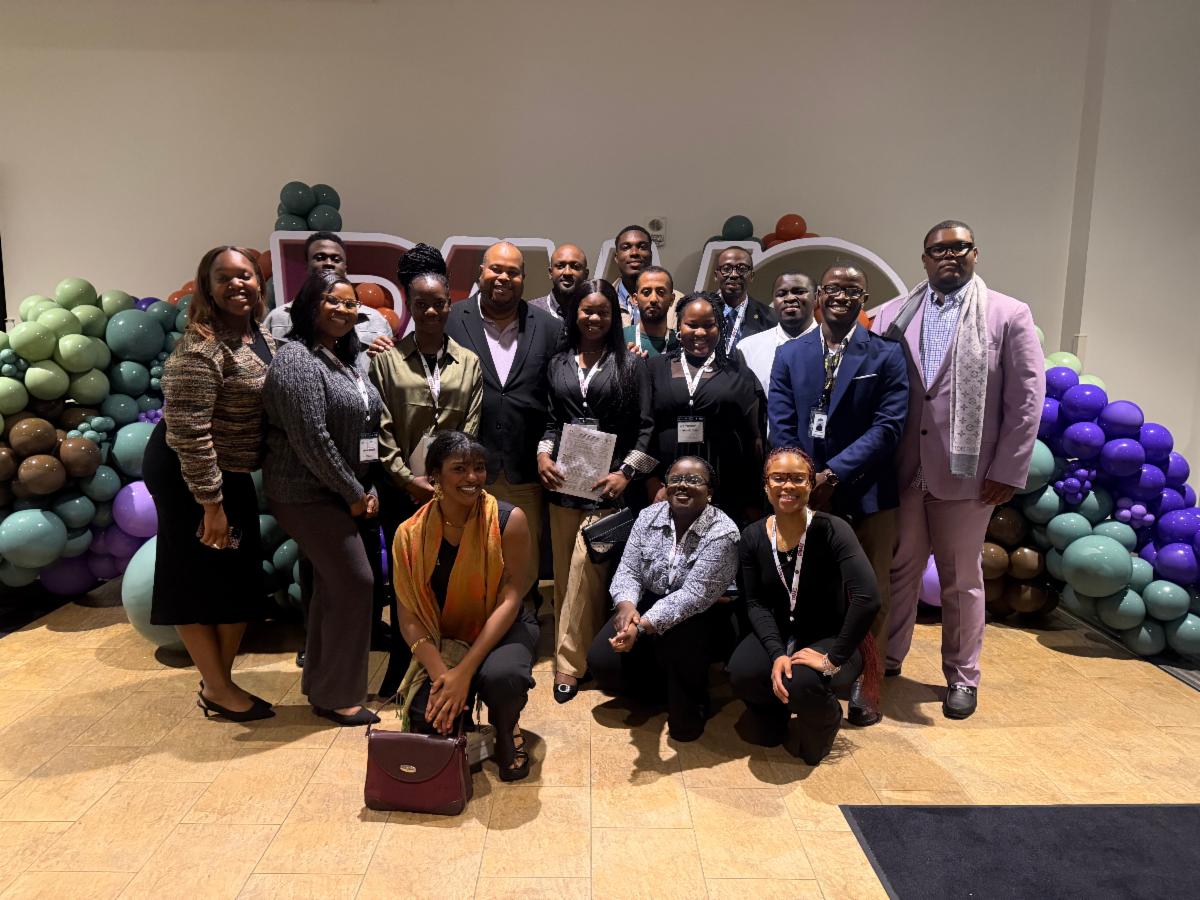
News Article
Top Honors Swept by Kentucky State University Students at 2025 Global Agriculture & Agribusiness Case Study Competition
January 12, 2026
