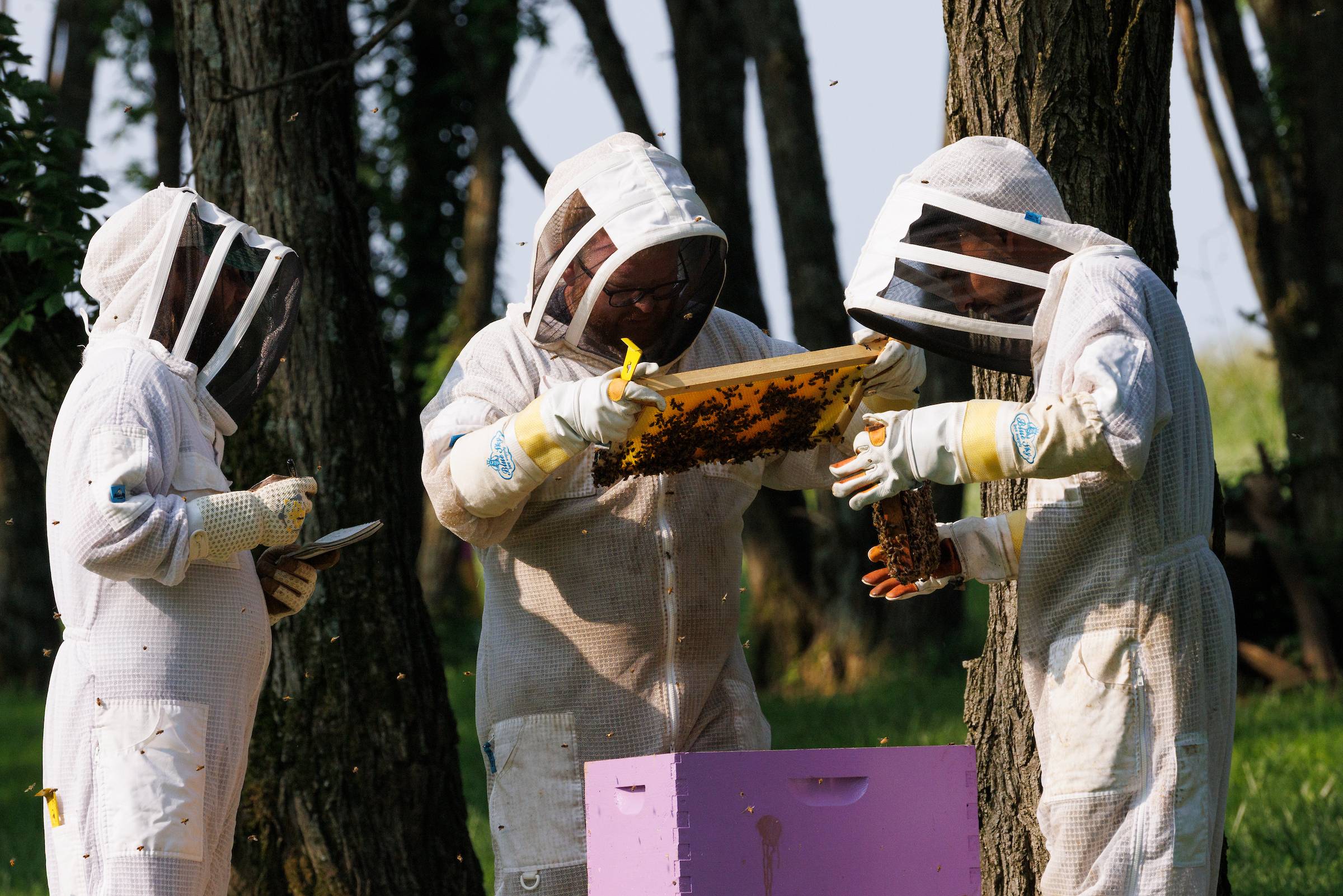
Kentucky State’s Dr. Tamara Horn Potter connects honey, pollinator health, and the food on consumers’ plates through national and statewide outreach
A jar of honey represents more than a familiar food. It reflects the work of beekeepers,
the health of pollinators, and an agricultural system that depends on bees to produce
many of the fruits, vegetables, and nuts Americans eat.
During National Honey Month, Kentucky State University beekeeper extension specialist
Dr. Tamara Horn Potter is helping consumers understand those connections and the choices
they can make to support local producers.
 In a commentary published by the Northern Kentucky Tribune, Dr. Potter calls attention to a widening gap between domestic honey production and
consumer demand. Americans consume approximately 450 million pounds of honey annually,
she noted, but U.S. producers supplied only 116 million pounds in 2025, the lowest
production recorded since federal tracking began in 1939.
In a commentary published by the Northern Kentucky Tribune, Dr. Potter calls attention to a widening gap between domestic honey production and
consumer demand. Americans consume approximately 450 million pounds of honey annually,
she noted, but U.S. producers supplied only 116 million pounds in 2025, the lowest
production recorded since federal tracking began in 1939.
Imported honey helps fill that gap, but some products may be adulterated with corn or rice syrup, or molasses. Consumers can more confidently support Kentucky producers, Dr. Potter said, by purchasing directly from local beekeepers and looking for the Certified Kentucky Honey label. The Kentucky State Beekeepers Association also maintains a searchable directory of local honey and hive-product sellers.
“Choosing local honey supports the beekeepers who care for honey bees and contribute
to the strength of our food system,” Dr. Potter said. “National Honey Month gives
us an opportunity to enjoy a remarkable product and recognize the knowledge, labor,
and stewardship behind every jar.”
Her outreach also places honey within a larger conversation about pollinator health
and food production. In June, Dr. Potter joined agricultural communicator Marianne
Smith Edge for an episode of the podcast Rooted & Restless titled “No Bees, No Food? Why Pollinators Matter.”
 During the 41-minute conversation, Dr. Potter discusses the economic contributions
of honey bees and native bees, environmental pressures affecting bee health, and the
challenges beekeepers face in transporting and maintaining colonies. She also offers
practical advice about selecting plants that attract pollinators, pairing honey varieties
with food, and protecting the species that help make approximately one out of every three bites of food possible.
During the 41-minute conversation, Dr. Potter discusses the economic contributions
of honey bees and native bees, environmental pressures affecting bee health, and the
challenges beekeepers face in transporting and maintaining colonies. She also offers
practical advice about selecting plants that attract pollinators, pairing honey varieties
with food, and protecting the species that help make approximately one out of every three bites of food possible.
Dr. Potter coordinates Kentucky State’s Beginner Beekeeping Program and serves as a beekeeper extension specialist in the University’s Cooperative Extension
Program. Her work helps beginning and experienced beekeepers develop the knowledge
and skills needed to manage healthy colonies and sustain their operations.
She is also the author of three books examining bees and their place in American history, commerce, and the environment: Bees in America: How the Honey Bee Shaped a Nation, Beeconomy: What Women and Bees Can Teach Us About Local Trade and the Global Market, and Flower Power: Establishing Pollinator Habitat.
As an 1890 land-grant institution, Kentucky State provides research-based education and practical assistance to people and communities across the Commonwealth. Dr. Potter’s work applies that mission to beekeeping, pollinator health, and local food production.