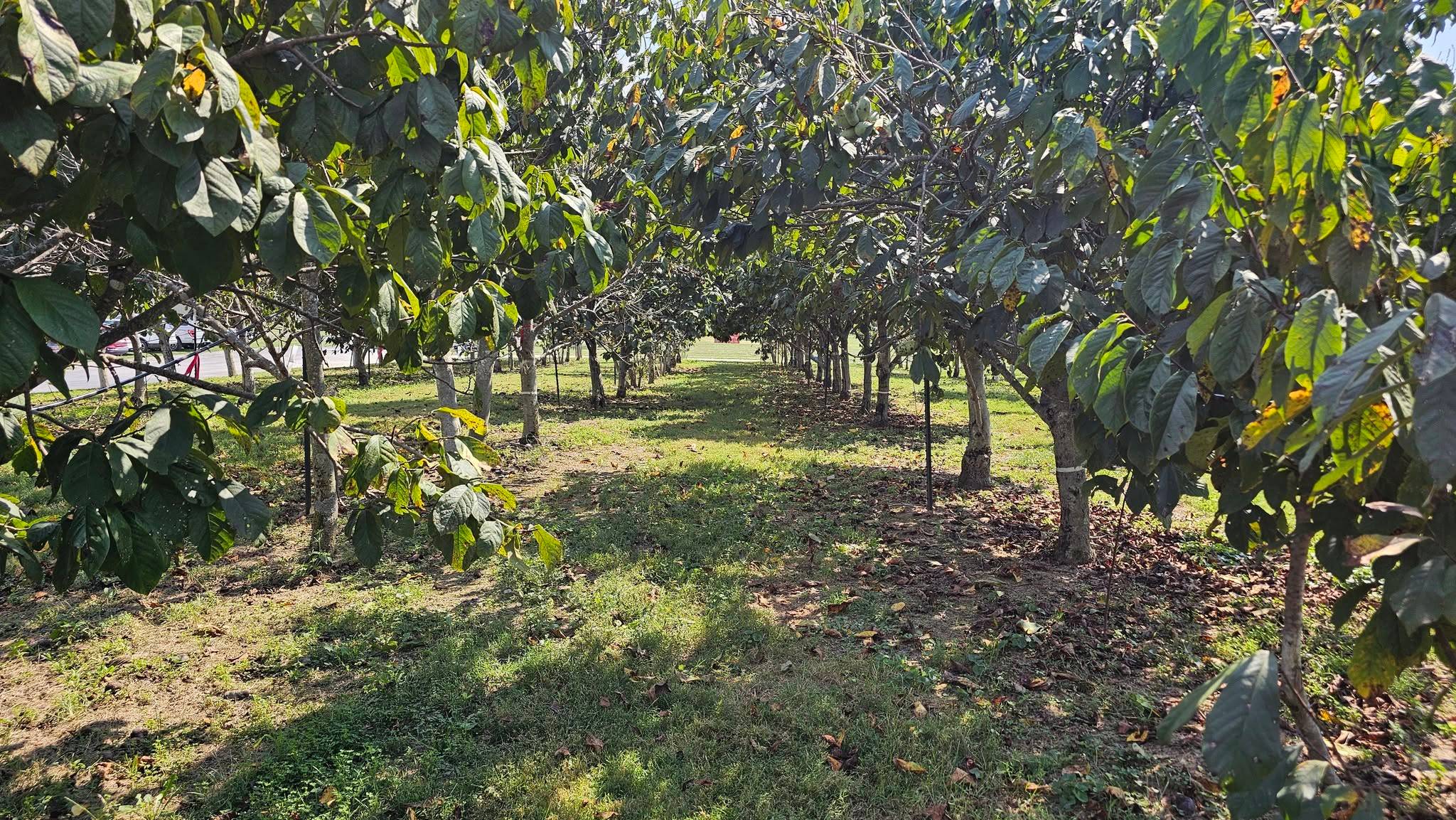
September outreach included a two-day workshop, appearances at festivals in Kentucky and Ohio, and a new planting guide
FRANKFORT, Ky. — Kentucky State University faculty, staff, and students brought research-based pawpaw education to growers, home gardeners, and consumers through three major events in Kentucky and Ohio during September.
The outreach included the fourth annual Louisville Pawpaw Festival, Kentucky State’s two-day Pawpaw Workshop, and the Ohio Pawpaw Festival. Together, the events introduced thousands of people to the native fruit and provided prospective and experienced growers with practical guidance on propagation, orchard management, processing, and marketing.
The pawpaw is the largest edible fruit native to the United States. Found naturally in forests and along streams throughout much of the eastern United States, including Kentucky, the fruit has creamy flesh and a tropical-like flavor often compared with banana, mango, and pineapple. Its distinctive flavor has created opportunities for fresh-market sales and value-added products.
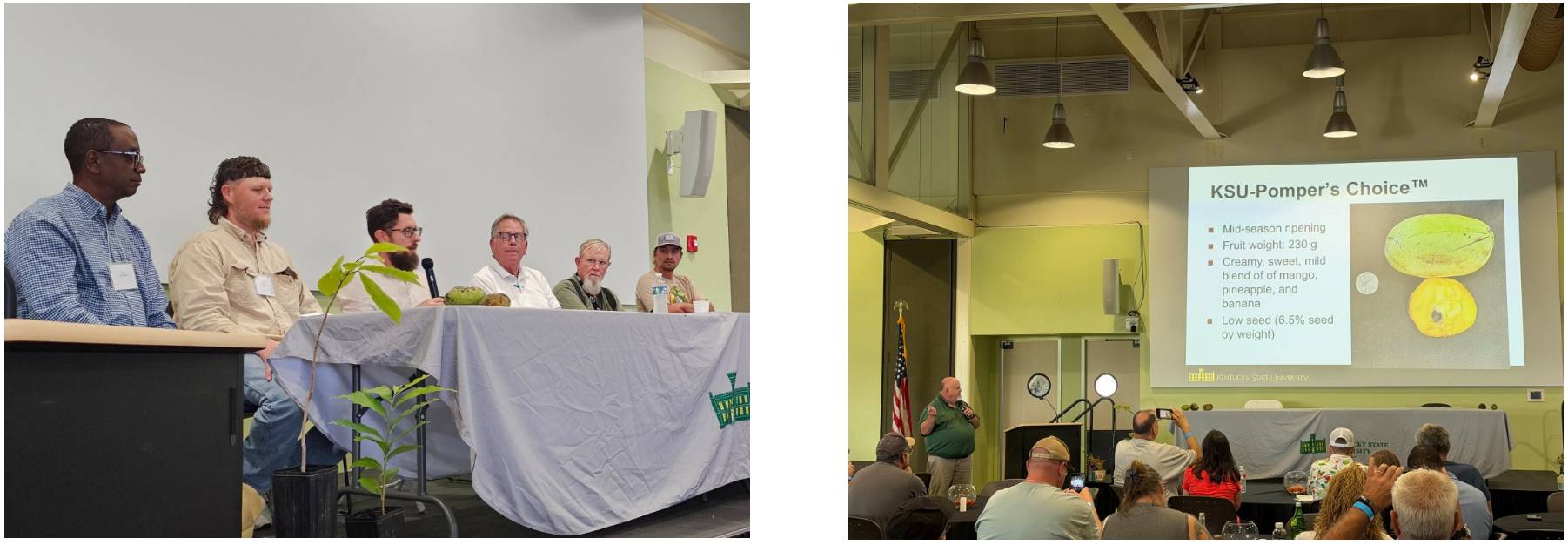
Kentucky State’s Horticulture and Pawpaw Program provided the featured educational component at the Louisville Pawpaw Festival on Sept. 12 at the Louisville Nature Center. Approximately 3,000 people attended the festival, which also offered guided hikes, local vendors, live music, and educational workshops.
Hundreds of visitors stopped at the Kentucky State display for fact sheets, educational materials, and samples of pawpaw jam. Dr. Kirk Pomper, professor of horticulture; Ms. Sheri Crabtree, research and Extension associate in horticulture; and Mr. Jeremy Lowe, research associate in horticulture, presented sessions on planting, cultivar selection, propagation, foraging, forest production, pests and diseases, fruit processing, and value-added products.
Four days later, approximately 150 participants from Kentucky and across the country gathered at the Harold R. Benson Research and Demonstration Farm for Kentucky State’s two-day Pawpaw Workshop.
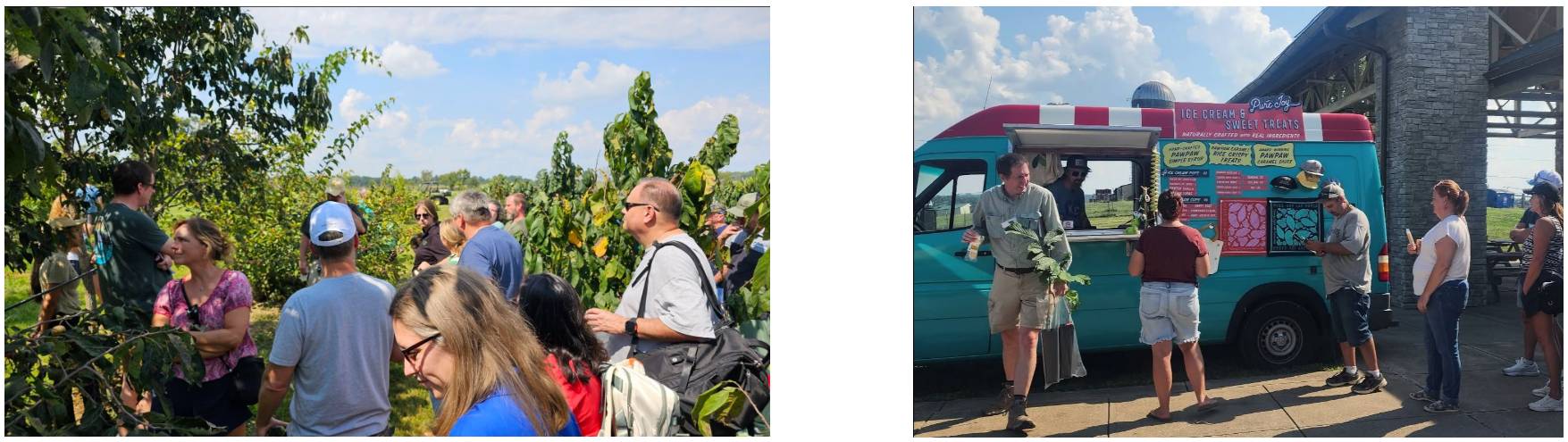
Dr. Pomper and Mr. Lowe led hands-on orchard demonstrations covering bench grafting, bark inlay grafting, propagation, and orchard establishment. Ms. Crabtree and Mr. Matthew Behrends, research and Extension associate in value-added products, demonstrated fruit processing and product development.
That evening, Chef Jessica Herbert of Southern Foodservice Management Inc. prepared a pawpaw-themed dinner demonstrating the fruit’s potential in fine dining. Entrées included jerk Frenched chicken breast, grilled shrimp, and tempeh served with a tropical pawpaw, mango, and grilled pineapple salsa and cilantro-lime sauce. The menu also featured pawpaw coconut rice, jerk chickpea and roasted vegetable salad with spicy pawpaw vinaigrette, and brioche rolls with pawpaw jam compound butter. A dessert tasting box included pawpaw and pomegranate panna cotta, dark chocolate mousse with toasted pawpaw and coconut crumble, and assorted French macarons.
The second day served as a special Pawpaw Third Thursday Workshop. Pawpaw experts presented information on propagation, orchard production, pests and diseases, marketing, and value-added products before participants returned to the orchards for additional tours.
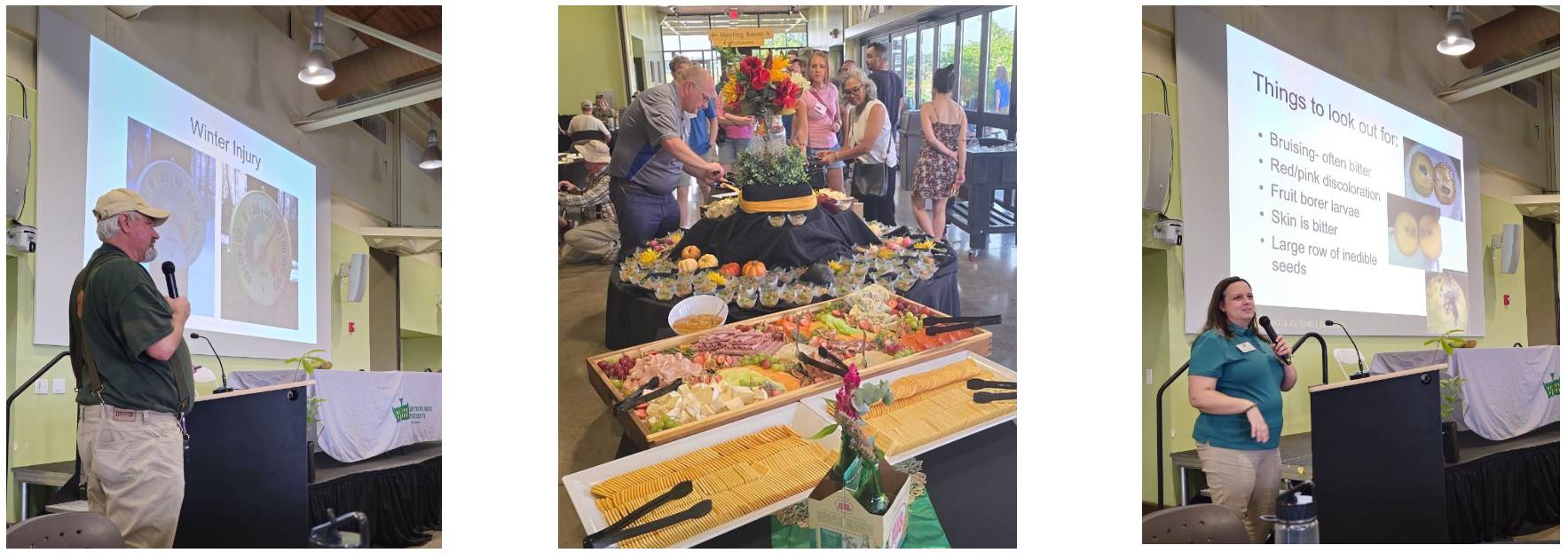
Kentucky State concluded its September outreach at the Ohio Pawpaw Festival in Nelsonville, Ohio. The three-day festival attracts approximately 10,000 people annually.
The University’s Horticulture and Pawpaw Program presented “So You Want to Grow Pawpaw”
to approximately 125 festivalgoers on Sept. 19. The session explored orchard establishment,
cultivar selection, strategies for increasing fruit production, and marketing opportunities.
Participants at all three events also received Kentucky State’s new Extension publication, Planting Pawpaw Trees. The fact sheet offers research-based guidance on selecting a site, planting pawpaw
trees, and managing young trees.
The Louisville Nature Center, the North American Pawpaw Growers Association, and the Ohio Pawpaw Festival were among the partners supporting the September programs.
Kentucky State’s Horticulture and Pawpaw Program conducts research, Extension, and educational activities in pawpaw genetics, cultivar development, propagation, orchard management, pest and disease control, processing, marketing, and value-added product development. Its workshops, field demonstrations, publications, and partnerships help growers explore the fruit’s potential as a specialty crop.
As the Commonwealth’s only public HBCU and an 1890 land-grant university, Kentucky State puts research into practice through educational programs that serve small farmers, prospective growers, and communities across Kentucky and beyond.