Hands-on displays introduce fairgoers to changing technologies, markets, and opportunities in agriculture
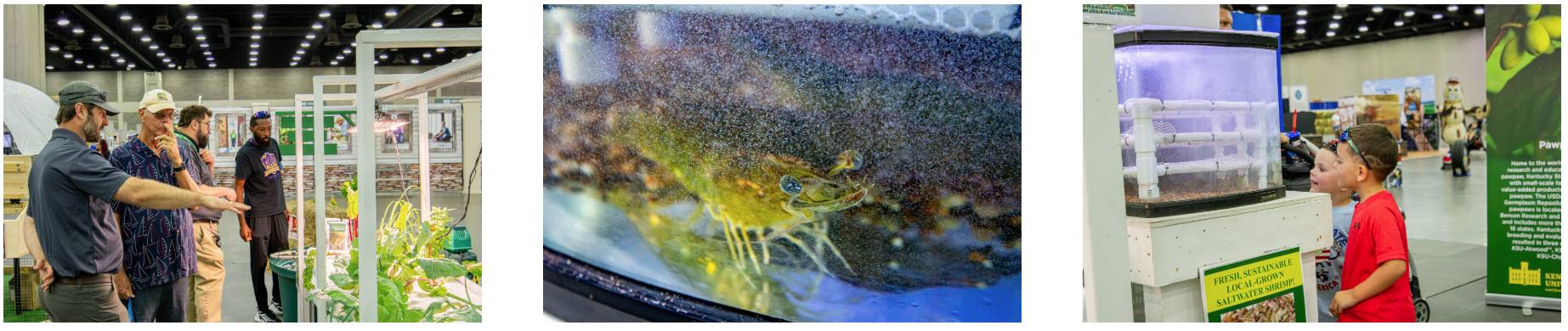
FRANKFORT, Ky. — Live shrimp swimming in an aquarium beside plants growing without soil gave Kentucky
State Fair visitors a glimpse of an agricultural future already taking shape at Kentucky
State University. Nearby, a small pool of koi supplied nutrients to the plants through
an aquaponics system. The displays highlighted Kentucky State research aimed at improving the indoor production
of high-demand foods.
University researchers are advancing methods for raising shrimp, tilapia, flounder,
barramundi, paddlefish, and bass in controlled environments. “Shrimp is the nation’s most popular seafood; however, about 85% of U.S. shrimp is
imported, and Kentucky State’s Aquatic Research Team is working to change that,” said
Dr. Andrew J. Ray, associate professor and chair of the School of Aquaculture and Aquatic Sciences.
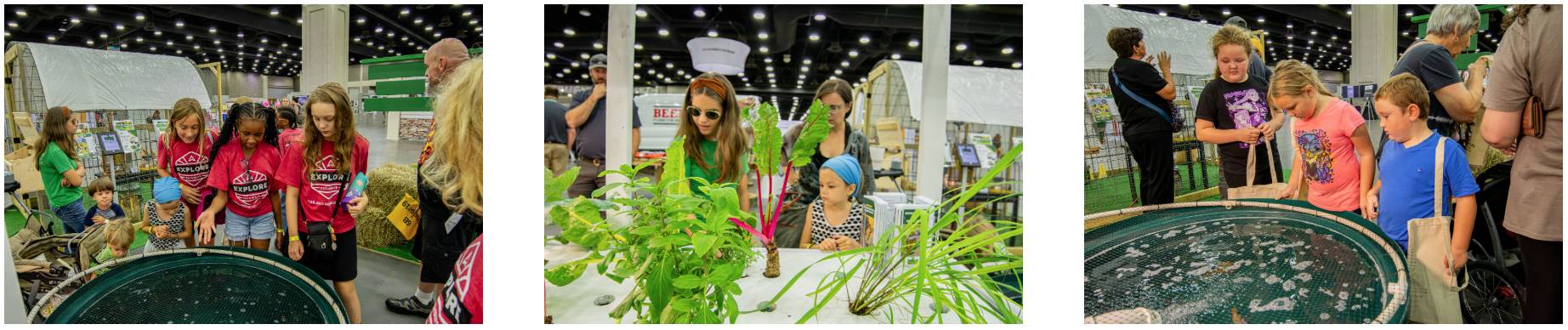
The exhibit also demonstrated the potential of hydroponics and aquaponics to produce food efficiently in urban communities and other settings where conventional farmland may be limited. Cora Teets, research and Extension associate for Sustainable Agriculture and Food Systems, said several teachers and urban farmers asked how Extension agents could help them establish soilless growing systems at schools and businesses.
Those technologies were part of a broader Kentucky State Land Grant Program exhibit exploring the connections among agricultural innovation, heritage, and stewardship during the Aug. 20-30 fair at the Kentucky Exposition Center in Louisville.
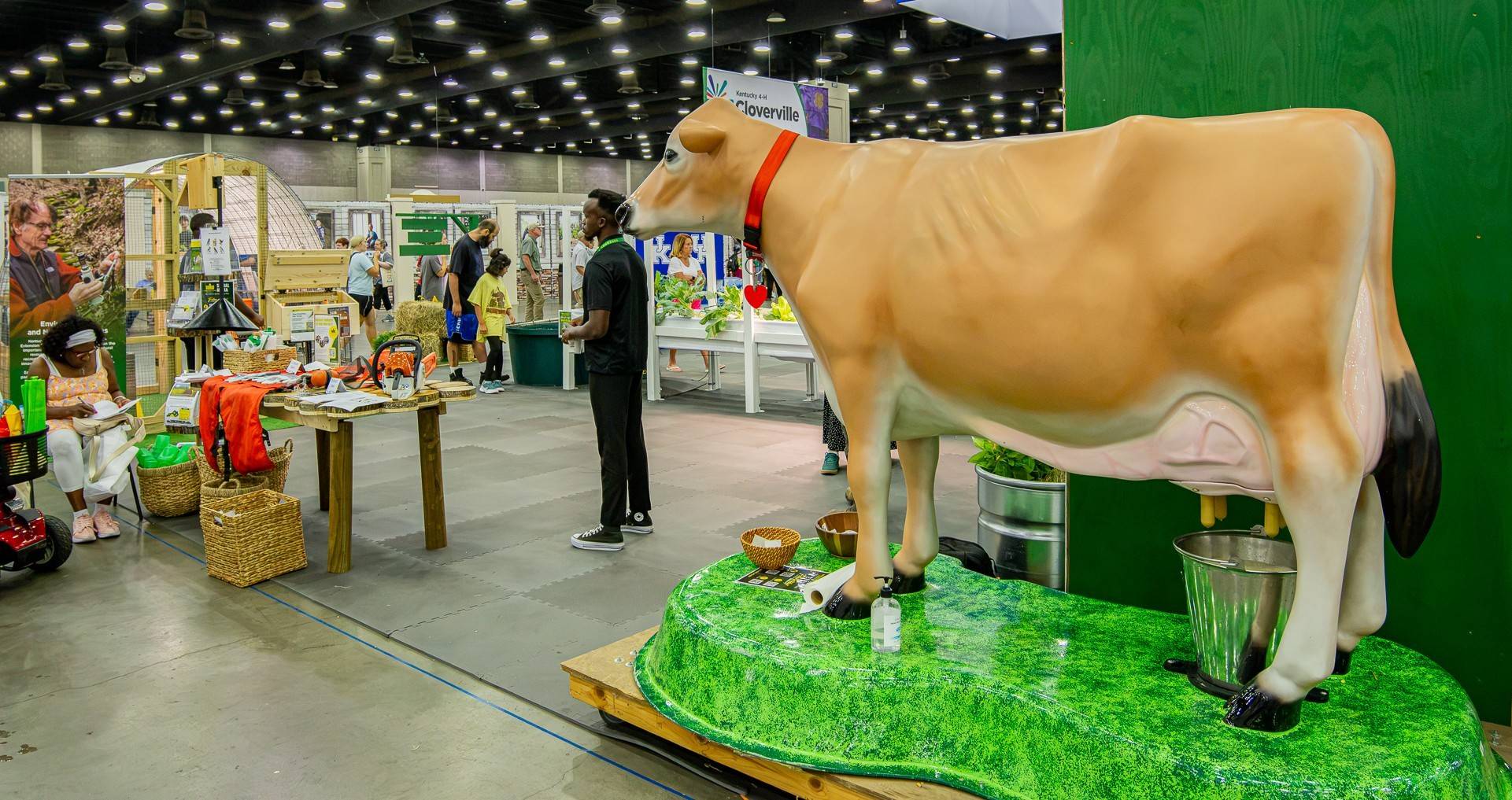
Kentucky State’s booth also attracted fairgoers with its model milking cow, which connected children and adults with agriculture’s familiar traditions. A homemade, walk-through chicken tractor paired that experience with practical instruction. The movable, floorless chicken coop allowed visitors to examine its construction and receive detailed, step-by-step guidance for building one at home.
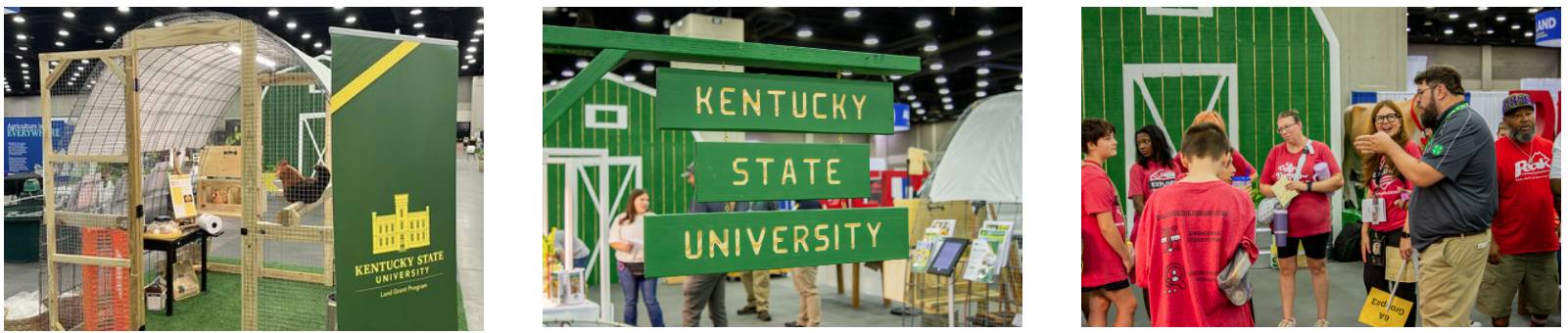
Forestry safety equipment, chainsaws, and tree-ring displays emphasized another responsibility: tending forests and other natural resources safely and sustainably.
Megan Goins, manager of Kentucky State’s Harold R. Benson Research and Demonstration Farm, coordinated the exhibit alongside Joni Nelson, manager of the Center for Sustainability of Farms and Families and Extension associate, and Louis Ross, manager of the Environmental Education and Research Center. Nelson and Ross played key roles in building, organizing, and supporting the experience.
Faculty, staff, students, and volunteers from across the Land Grant Program contributed displays, expertise, and time throughout the 11-day fair.
“This exhibit succeeded because so many people worked together to create an experience that was informative, practical, and inviting,” Goins said. “Visitors did more than look at displays. They asked questions, interacted with the exhibits, and discovered new ways agriculture connects with their lives.”
Container-grown pawpaw trees provided another example of how research at a land-grant institution can respond to consumer interest and create commercial opportunities. Pawpaw, the largest edible fruit native to the United States, is often described as combining the flavors of banana, mango, and pineapple. Its growing use in beverages, desserts, preserves, and other products prompted questions about cultivation and availability.
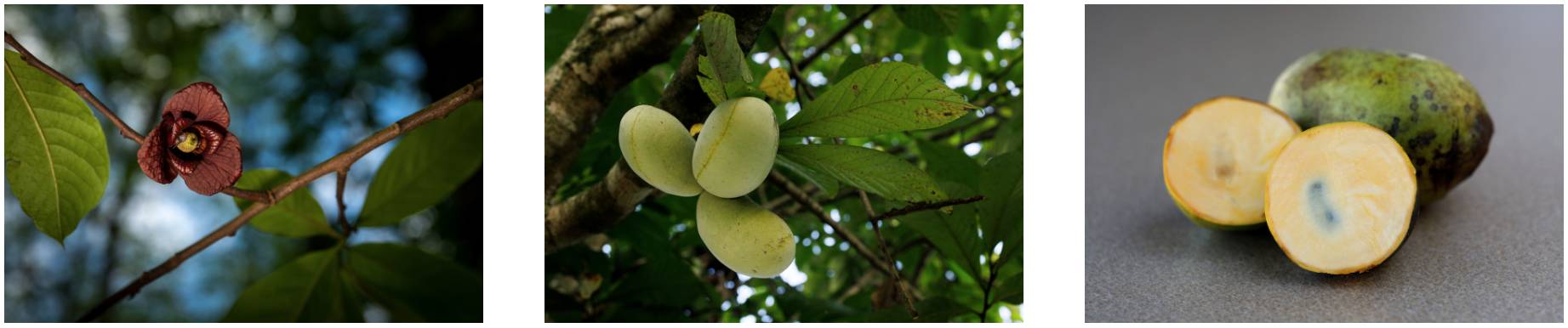
Dr. Kirk W. Pomper, professor of horticulture and curator of Kentucky State’s Clonal Germplasm Repository for pawpaw, brought the trees during his volunteer shifts so fairgoers could examine the plants firsthand. He also shared information about Kentucky nurseries where visitors could purchase pawpaw trees.
Kentucky State began formal pawpaw research in 1990 and has maintained its repository since 1994. More than 2,000 trees representing plant material collected from 17 states grow across 12 acres at the Benson Research and Demonstration Farm in Frankfort.
That expertise helped support the second seasonal release of Pawpaw Ale-8. Developed in collaboration with Kentucky State researchers, the beverage brings decades of University work involving cultivation, genetics, storage, and commercialization to a growing consumer audience.
Kentucky State’s presence extended beyond the AgLand exhibit. Invited by the Kentucky Department of Agriculture for the second consecutive year, the University’s pollinator conservation program and entomology laboratory represented Kentucky State in the Bees and Honey Room. Kristin Conrad, research and Extension associate in forestry, shared native pollinator specimens, identification resources, planting guides, and information about the University’s Bee Campus affiliation. Paul Baker, research associate in entomology and insect management, displayed beneficial and pest insects commonly found in agricultural systems.

Dr. Frederick Bebe, assistant research professor, and his team used the fair’s accessible community setting to share skin-cancer research and educate visitors, particularly farmers, about early detection, prevention, and protection from prolonged ultraviolet radiation exposure.
In all, Kentucky State faculty, staff, and student volunteers recorded nearly 20,000 direct engagements with fairgoers. The University also appeared four times on the Farm to Fair cooking stage, including two presentations highlighting aquaculture.
School field trips brought some of the strongest engagement. Several teachers expressed excitement about returning with students for the Fourth Annual Ag Roundup, scheduled for Sept. 24-26 at Kentucky State.
The 2025 Ag Roundup welcomed nearly 4,000 participants, including more than 1,000 middle and high school students and educators. The 2026 event is expected to be even larger, with greater student attendance and more opportunities to explore agriculture and related fields through hands-on learning.
Dr. Marcus Bernard, dean of the College of Agriculture, Health, and Natural Resources and director of Land Grant Programs, said the fair exhibit reflected Kentucky State’s responsibility to translate knowledge into meaningful community impact.
“A land-grant institution brings research, learning, and Cooperative Extension together in service to people and communities,” Dr. Bernard said. “Our State Fair exhibit gave Kentuckians an opportunity to experience that mission firsthand, from emerging food-production technologies and commercial applications of research to practical knowledge they can use at home.”
Land Grant team members also served in activities throughout the fair.
Dr. Bernard presented on the Farm to Fair cooking stage, as did Joni Nelson. Bart
Branstetter, area Extension director for Western Kentucky, assisted with Livestock
Arena setup and judging. Mason Crawford, state specialist in small-scale poultry, presented on the cooking
stage, served as superintendent of the 4-H Poultry Judging Competition, and assisted with the 4-H Avian Quiz Bowl and awards presentation. Lynsey Crumbie,
state specialist in entrepreneurship, judged the Kentucky Department of Agriculture’s
Largest Pumpkin and Watermelon Contest.
Jacob Hall, horticulture and small farms Extension agent, served as assistant superintendent
of Brown Swiss for the Dairy Show. Tyler London, area agent in agriculture technology,
served as superintendent of Brown Swiss. Angie Swihart, Family and Consumer Sciences
Extension agent, served as superintendent of the Needlework Contest in Cloverville
and worked at the Hancock County booth. Clara Taylor, urban horticulture Extension
agent in Warren County, participated in horticulture judging.
From indoor food production and commercial applications for native fruit to livestock traditions, public health, pollinator conservation, and responsible forest management, Kentucky State’s State Fair presence demonstrated how land-grant research and Cooperative Extension connect agriculture’s heritage with emerging technologies, markets, and possibilities.