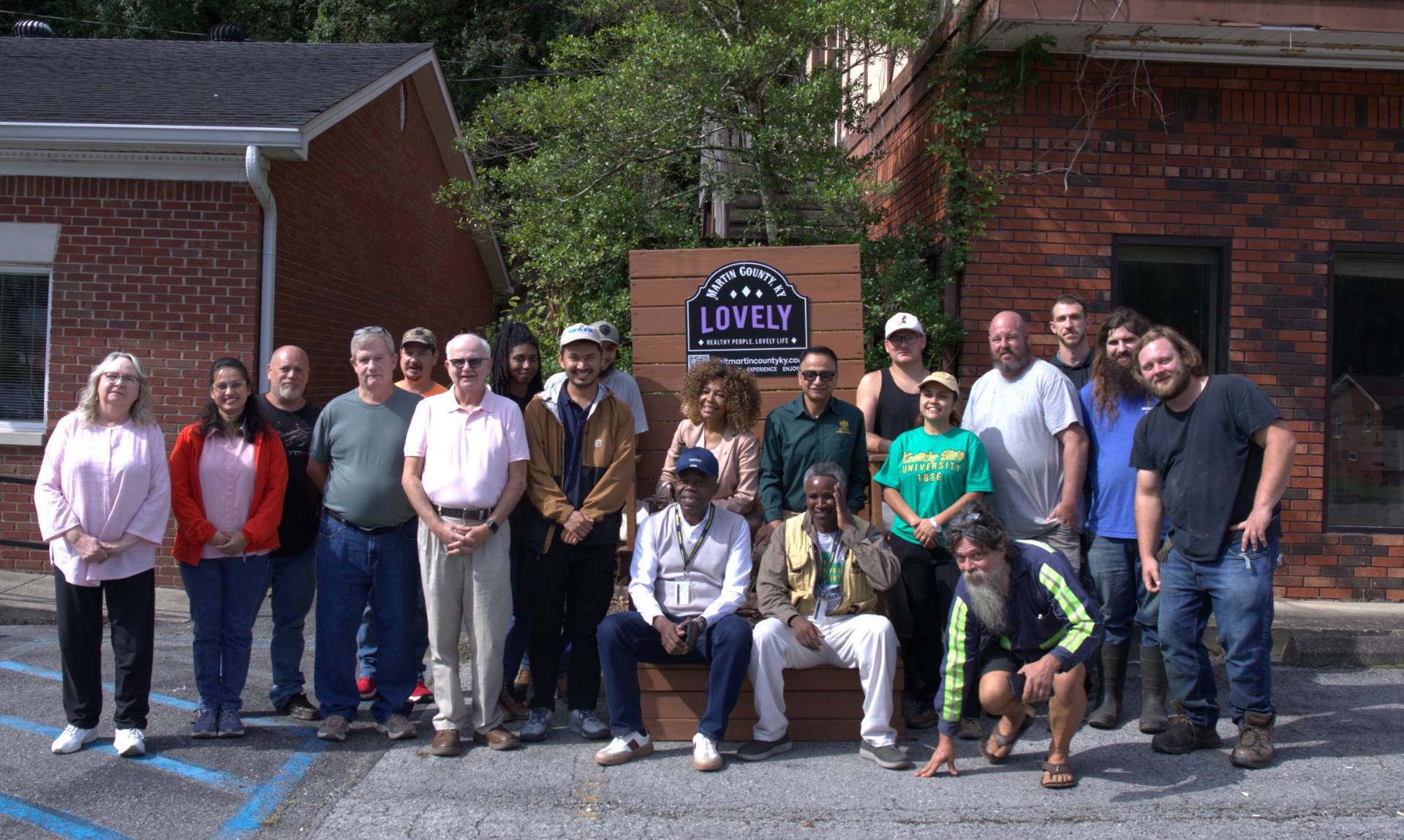
Kentucky State program combines specialty mushrooms, silvopasture, forest management and drone technology
FRANKFORT, Ky. — From cultivating specialty mushrooms on logs to using drones to assess forest health, Eastern Kentucky landowners explored practical ways to manage their land and create new sources of income during a Kentucky State University forestry and agroforestry training on Aug. 26, 2026.
The 24 participants, including 10 residents of Pike and Martin counties, began the day at the Rufus Reed Branch of the Martin County Public Library in Lovely. From there, the program moved to a nearby tree plantation, where classroom concepts became field practice.
Dr. Manisha Parajuli, assistant professor of forestry, opened the training by framing forested land as both an ecological resource and a source of economic possibility.
Specialty mushroom production offered one example. Dr. Francis Onduso, assistant professor of forestry, demonstrated wild mushroom identification and collection techniques, then explained how growers can cultivate high-value species on logs and other substrates.
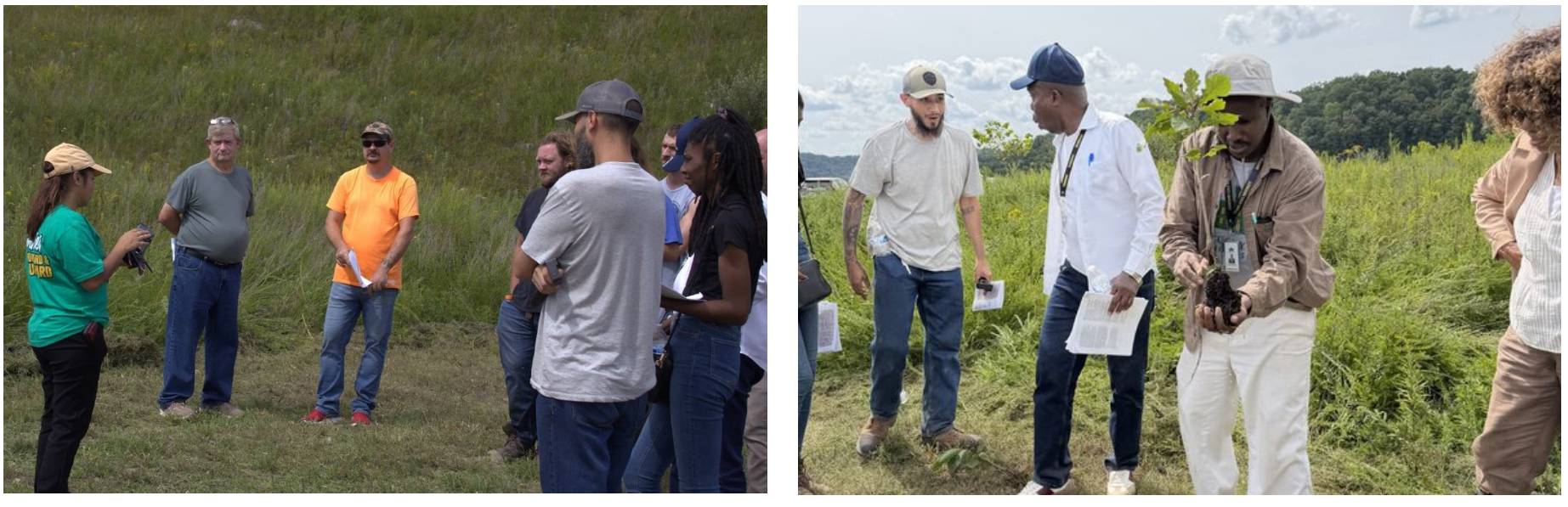
Shiitake, reishi, split-gill and oyster mushrooms can be produced in indoor or outdoor settings, Dr. Onduso told participants. Along with suitable growing conditions and safe handling, his session examined ways landowners can add value to forest-grown products.
Beyond mushrooms, participants explored silvopasture, which integrates trees, forage and livestock within a working agricultural system. The practice can support production and income without separating those goals from the long-term health and resilience of the land.
“This training is part of our effort to bring practical forestry and agroforestry knowledge directly to Eastern Kentucky communities,” said Dr. Buddhi Gyawali, principal investigator for the project. “By connecting research, Extension and hands-on learning, we hope to help landowners identify sustainable management practices that can also create new economic opportunities.”
Afternoon activities shifted the focus from forest-based enterprises to tree establishment, land management and technology. At the nursery, Dr. Parajuli introduced participants to native tree species, seedling storage, transplanting and long-term care.
Once in the field, participants learned to identify trees and measure their diameter and height. LI-COR and SPAD instruments helped them evaluate indicators of tree health and consider how survival assessments can guide future management decisions. They also measured soil acidity with a pH meter and tested compaction with a soil penetrometer.
Dr. Parajuli demonstrated how the technology can support forest assessment, monitoring and data collection, then outlined the process for obtaining a remote pilot certificate.
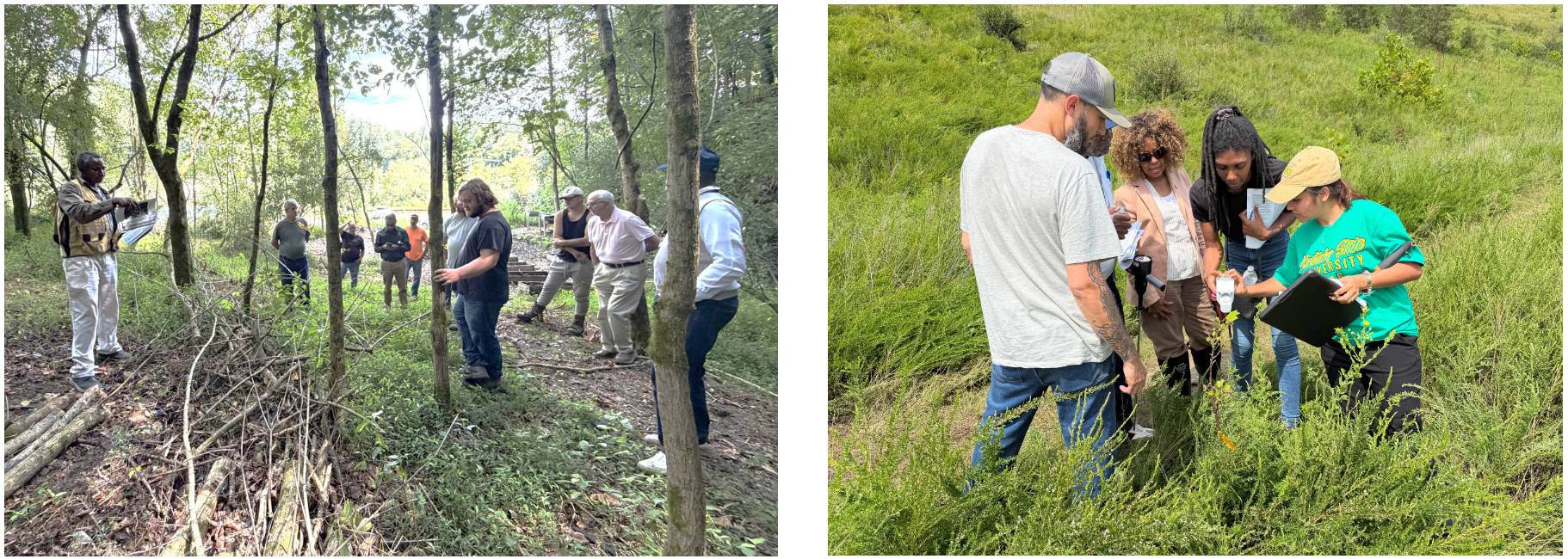
Invasive plants presented another management challenge. Extension Associate Anna Claire Rogers discussed sericea lespedeza and autumn olive and demonstrated herbicide application techniques used to control their spread.
Graduate students Ashmita Bhandari and Nischal Sapkota assisted throughout the field exercises, which concluded with a tree-planting demonstration.
Interest continued after the training. Several participants contacted Dr. Parajuli with questions about establishing tree plantations and attending future drone programs. Others expressed interest in growing mushrooms or adapting forested acreage for silvopasture.
The Martin County Public Library supported local outreach by promoting the event through its social media channels. Isabel Brumley, USDA program liaison for Central State University and Kentucky State University, also attended.
Supported by the USDA Rural Business Development Grant project “Ecosystem Restoration and Business Development,” Award No. 20-037-646489357, the training reflects Kentucky State’s 1890 land-grant mission to provide farmers, landowners and communities with research-based knowledge.