FoodChain’s growth reflects Kentucky State’s land-grant work in aquaponics, Extension,
aquatic science, and soilless agriculture
FRANKFORT, Ky. — Fresh, affordable food and water resilience are coming together in
Lexington, where FoodChain’s Neighborhood Green Grocery has opened next to the nonprofit’s
aquaponics farm and kitchen.
FoodChain, a Lexington nonprofit focused on local food, education, workforce training, and hands-on learning, works to bring healthy, affordable food to communities that need better access to fresh food. Its new grocery, recently featured by the Lexington Herald-Leader, expands that work while offering a public-facing example of a larger Kentucky State University story — one about water, food systems, Extension, student training, and the future of agriculture in the Commonwealth.
 Kentucky State’s relationship with FoodChain reaches back more than a decade. Janelle
Hager, State Specialist for Aquaponics at Kentucky State’s Aquaculture Research Center,
joined FoodChain’s Board in 2014, shortly after its aquaponics demonstration system
was built. In 2019, Kentucky State partnered with FoodChain to install a marine shrimp
aquaponic system, extending the University’s long-standing research and Extension
work in aquaponics.
Kentucky State’s relationship with FoodChain reaches back more than a decade. Janelle
Hager, State Specialist for Aquaponics at Kentucky State’s Aquaculture Research Center,
joined FoodChain’s Board in 2014, shortly after its aquaponics demonstration system
was built. In 2019, Kentucky State partnered with FoodChain to install a marine shrimp
aquaponic system, extending the University’s long-standing research and Extension
work in aquaponics.
For Kentucky State, FoodChain’s continued growth illustrates the kind of real-world, partner-based ecosystem the University is helping build around aquaponics and soilless agriculture — connecting aquatic science research, Cooperative Extension expertise, student training, and community food systems across the Commonwealth.
“This is exactly how Extension supports the land-grant mission,” Hager said. “Through partnerships like FoodChain, we can translate aquaponics research into practical systems that communities, students, and beginning farmers can see, learn from, and use.”
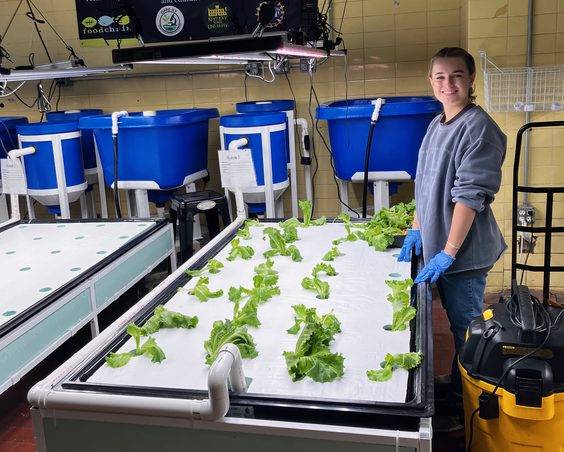
Aquaponics combines aquatic animal production with plant production in a recirculating system. Fish or shrimp waste provides nutrients that can be used by plants, while water is filtered and reused. The approach offers a practical example of how agriculture, water quality, local food, and sustainability can work together.
That connection also reflects Kentucky State’s expanding role in soilless agriculture through DARE-KY, or Driving AgTech Research and Education in Kentucky. The $7 million National Science Foundation-supported initiative is the largest NSF grant in Kentucky State history and is designed to strengthen research, education, and workforce development around soilless food systems, including hydroponics and aquaponics.
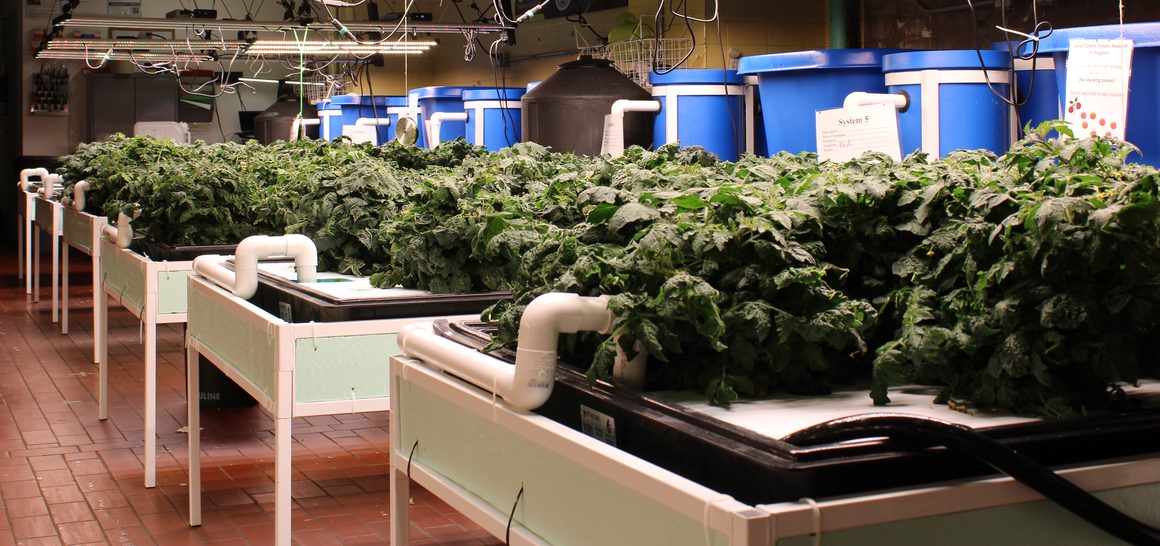
Today, FoodChain is a DARE-KY subaward partner. As part of that work, Kentucky State has built replicated aquaponic research systems at FoodChain’s facility. The systems are designed to serve as a research incubator for institutions without aquaponics research infrastructure and as an early access point for middle and high school students to engage in agricultural research.
“FoodChain gives people a chance to see aquaponics in action — not as an abstract research concept, but as a working food system connected to education, local food access, and community partnerships,” Hager said. “That is where Kentucky State can make a meaningful contribution, by helping connect research, Extension, and community learning.”
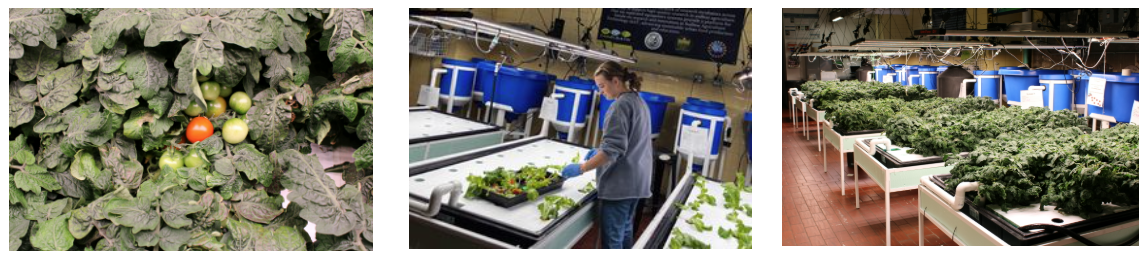
At Kentucky State, researchers are studying questions related to nutrient recovery, aquaculture waste, microbial activity, water quality, food safety, and system performance. Through DARE-KY, partners are developing research incubators, expanding coursework, creating student research opportunities, and strengthening connections between academic discovery and agricultural practice.
The work also connects to Kentucky State’s growing academic pathways in aquatic science. The University recently launched a Bachelor of Science in Aquatic Science, approved Jan. 30, 2026, by the Kentucky Council on Postsecondary Education. Kentucky State announced the degree as the first program of its kind in the Commonwealth and one of the few undergraduate programs of its kind in the nation.
The degree, offered through Kentucky State’s School of Aquaculture and Aquatic Science, is designed to prepare students for careers connected to aquatic systems, sustainable resource management, food security, clean water, and environmental stewardship.
Together, FoodChain, DARE-KY, and the new degree show how Kentucky State is connecting its land-grant mission to emerging needs in food, water, sustainability, and technology.
The goal is not only to study soilless agriculture, but to help Kentucky build the research base, facilities, training programs, and employment pathways needed to support the field over time. Through partnerships like FoodChain, Kentucky State is helping students and partners see how aquatic science can move from research tanks into classrooms, farms, kitchens, grocery shelves, and communities.
As FoodChain expands its work in Lexington, Kentucky State’s Extension partnership shows how water stewardship, food production, and community access can grow together.