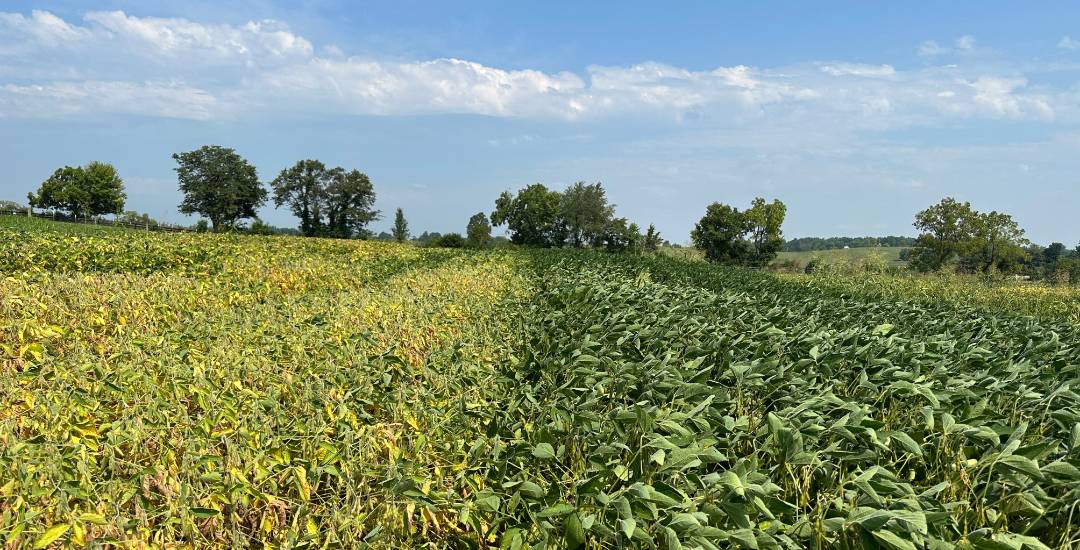
Kentucky State study finds late-season nitrogen applications can improve seed protein
without reducing oil concentration
FRANKFORT, Ky. — For soybean growers, the value of a crop is measured not only in
bushels but also in protein.
New research from Kentucky State University points to a practical strategy for addressing
one of the soybean industry’s long-running concerns: the decline in seed protein concentration,
which affects the quality of soybean meal used in animal feed.
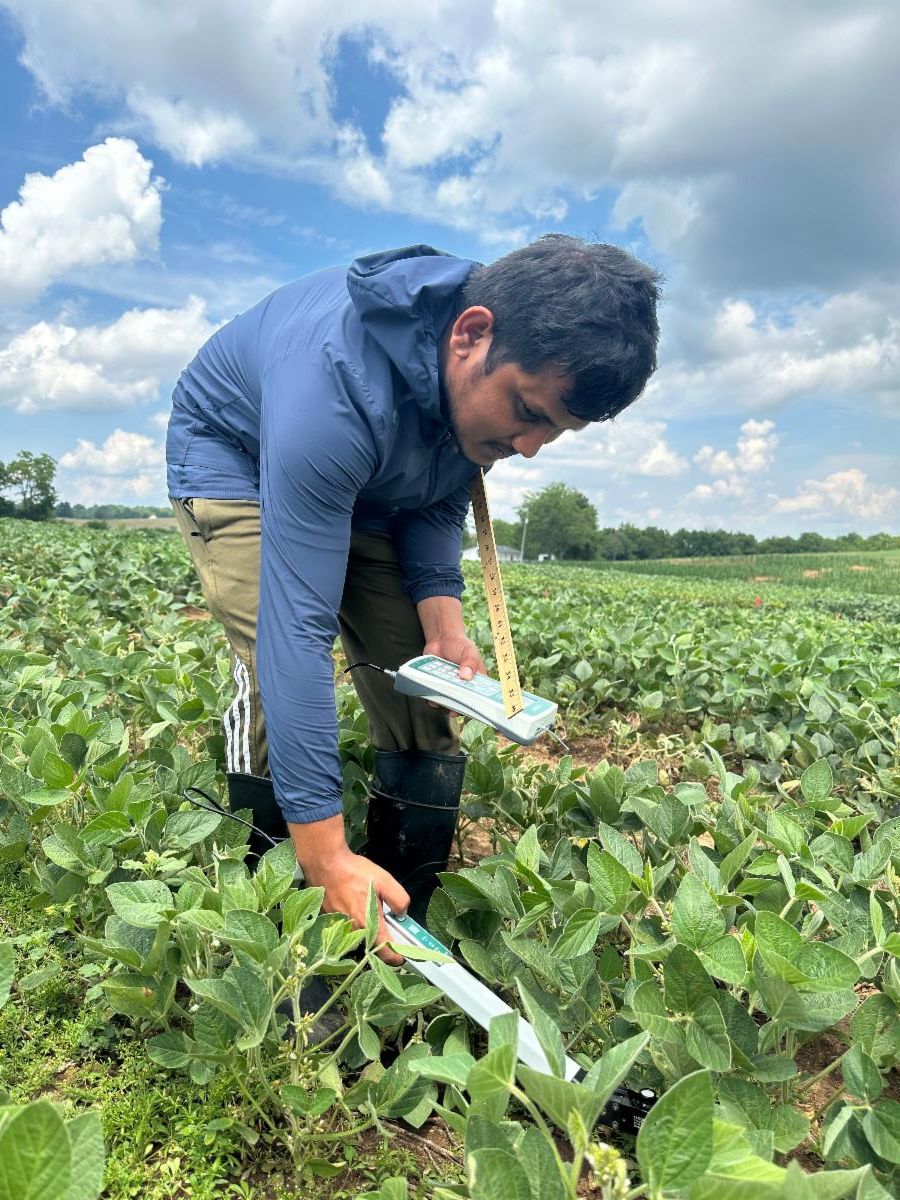
 Deepak Khatri, who led the study under the mentorship of Dr. Anuj Chiluwal, conducted
a two-year field study at Kentucky State’s Harold R. Benson Research and Demonstration
Farm. The research evaluated the effects of biochar and late-season nitrogen fertilization
on soybean yield and seed composition across two maturity group soybean cultivars.
Deepak Khatri, who led the study under the mentorship of Dr. Anuj Chiluwal, conducted
a two-year field study at Kentucky State’s Harold R. Benson Research and Demonstration
Farm. The research evaluated the effects of biochar and late-season nitrogen fertilization
on soybean yield and seed composition across two maturity group soybean cultivars.
The study found that late-season nitrogen fertilization increased seed protein concentration
by 1.2% to 2.8% across both growing seasons. Oil concentration was not affected, indicating
the strategy improved protein without creating a trade-off in oil quality.
“Declining soybean protein concentration is a major concern because it directly affects
the quality of soybean meal used in animal feed,” Khatri said. “Our research provides
evidence that lower nitrogen applications during the seed-filling period can help
reverse this trend.”
The research takes a different approach from previous studies by applying varying
doses of nitrogen fertilizer during the seed-filling period, when the crop’s nitrogen
demand peaks and biological nitrogen fixation and soil nitrogen supply may no longer
be sufficient under high-yielding conditions.
Dr. Chiluwal said the findings are significant because earlier efforts to improve
soybean protein through late-season nitrogen applications often relied on fertilizer
rates too high to be practical for producers.
 “Previous studies aimed at increasing soybean protein through late-season nitrogen
applications relied on extremely high rates — ranging from more than 200 to 870 kilograms
per hectare — making them neither economically viable nor environmentally sustainable,”
Dr. Chiluwal said. “In contrast, this study takes a different approach by testing
lower nitrogen rates of 40 to 120 kilograms per hectare, applied in three split applications
during the seed-filling period. The findings demonstrate that even modest nitrogen
applications can improve seed protein concentration, offering a more practical and
scalable solution to a significant industry challenge.”
“Previous studies aimed at increasing soybean protein through late-season nitrogen
applications relied on extremely high rates — ranging from more than 200 to 870 kilograms
per hectare — making them neither economically viable nor environmentally sustainable,”
Dr. Chiluwal said. “In contrast, this study takes a different approach by testing
lower nitrogen rates of 40 to 120 kilograms per hectare, applied in three split applications
during the seed-filling period. The findings demonstrate that even modest nitrogen
applications can improve seed protein concentration, offering a more practical and
scalable solution to a significant industry challenge.”
Khatri published the findings as first author in the peer-reviewed paper “Biochar and late-season nitrogen fertilization effects on soybean yield and seed quality” in the Journal of Agriculture and Food Research. Dr. Chiluwal serves as the corresponding author. Co-authors include Lalit Pun Magar,
Sudip Poudel, Suraj KC, Dr. Maheteme Gebremedhin, and Dr. Shawn Lucas.
The study was conducted through Kentucky State’s Agronomy Lab and funded by the USDA-NIFA
1890 Capacity Building Grant, Award Number 2023-38821-39960.