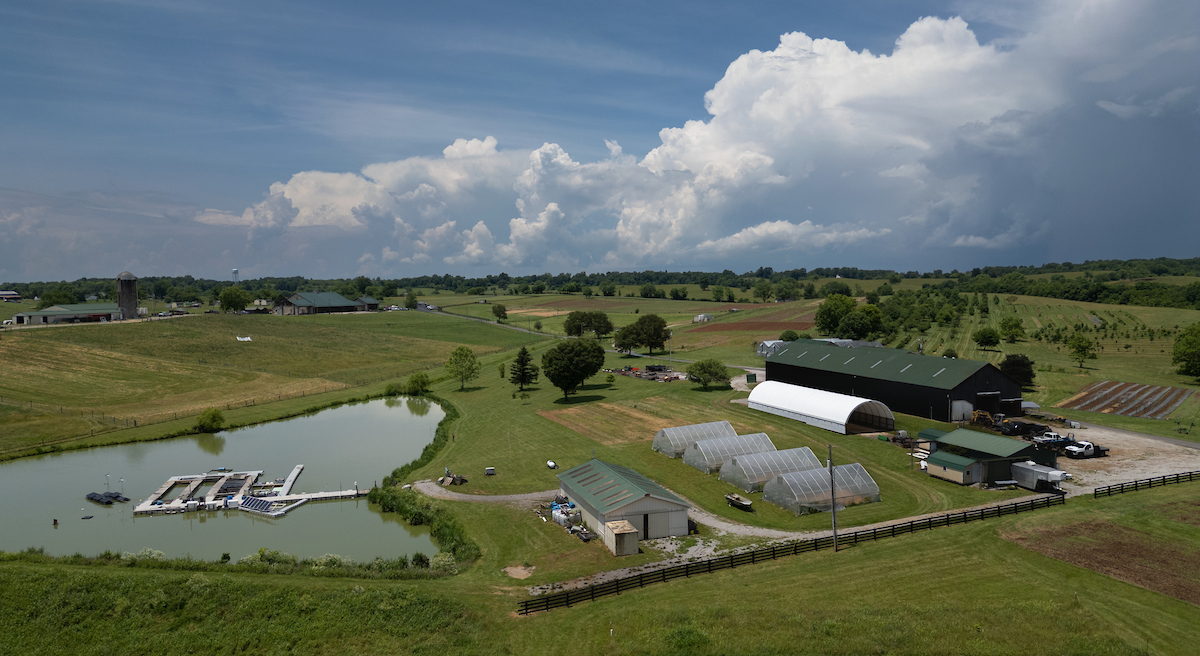
MOU follows a national observance of the 135th anniversary of the Second Morrill Act of 1890
FRANKFORT, Ky. — A new memorandum of understanding between the U.S. Department of Agriculture and the Council of 1890 University Presidents is the latest federal affirmation of the public value delivered by 1890 land-grant universities, including Kentucky State University, through education, research, and Cooperative Extension.
 Signed March 5, the MOU is designed to sustain and expand the federal partnership
with the nation’s 19 historically Black land-grant universities and strengthen their
role in workforce development, institutional capacity, and community outreach.
Signed March 5, the MOU is designed to sustain and expand the federal partnership
with the nation’s 19 historically Black land-grant universities and strengthen their
role in workforce development, institutional capacity, and community outreach.
The announcement comes on the heels of a national observance of the 135th anniversary of the Second Morrill Act of 1890, the landmark legislation that expanded America’s land-grant system and secured the
place of 19 institutions, including Kentucky State, within a national network dedicated
to teaching, research, and service for the public good.
At Kentucky State, that public value is visible in concrete outcomes.
Across Kentucky, Cooperative Extension reaches more than 30,000 Kentuckians each year,
supports more than 1,000 small-scale farmers with technical assistance, and has helped
distribute more than $5 million through the Small-Scale Farm Grant Program in 116 of the state’s 120 counties.
That public value also takes the form of direct, on-the-ground benefits for agricultural
producers.
The University’s producer-focused hay testing lab, opened in May 2025 at the Cooperative Extension office in Barren County, has provided
rapid analysis and expert interpretation to help farmers improve forage quality, marketability,
and profitability.
Since opening eight months ago, the hay testing lab has processed nearly 700 samples
from more than 120 producers across 26 Kentucky counties, with that number continuing
to grow each week. In a state where hay and forage are central to livestock production,
this kind of practical, no-cost service shows how land-grant universities turn research
and technical expertise into direct community benefit.
 “One hundred and thirty-five years after the Second Morrill Act affirmed the importance
of institutions like Kentucky State University, this MOU is an important federal recognition
of what 1890 land-grant universities have long demonstrated through their work,” said
Dr. Koffi C. Akakpo, president of Kentucky State University.
“One hundred and thirty-five years after the Second Morrill Act affirmed the importance
of institutions like Kentucky State University, this MOU is an important federal recognition
of what 1890 land-grant universities have long demonstrated through their work,” said
Dr. Koffi C. Akakpo, president of Kentucky State University.
“At Kentucky State, that work takes the form of education that expands opportunity,
research that addresses real-world challenges, and Cooperative Extension that delivers
practical value across the Commonwealth,” Akakpo added, “by supporting farmers and
small producers, preparing students for high-demand careers, and advancing innovation
in agriculture, environmental stewardship, and community health.”
That work continues to grow through new federal support. The USDA recently awarded
Kentucky State University $1.7 million in Capacity Building Grants to strengthen hands-on learning for students and deliver practical training and technical
support for producers.
The four projects will advance specialty crop production and marketing, agricultural
recruitment through a summer immersion program, expanded research, education, and
Extension training tied to workforce readiness, and stronger data competency for agricultural
science majors. Together, they reinforce the same land-grant priorities reflected
in the new MOU: building capacity, preparing the next generation, and connecting research,
teaching, and outreach to practical outcomes.
“This recognition affirms the importance of the 1890 land-grant model because it is
built around results,” said Dr. Marcus Bernard, dean of the College of Agriculture,
Health, and Natural Resources and director of Land-Grant Programs at Kentucky State
University.
“Whether it is free hay testing and interpretation for producers, research that strengthens
food safety and environmental stewardship, new workforce-aligned degree programs,
or partnerships that turn Kentucky-grown innovation into market opportunity,” Bernard
added, “Kentucky State is showing how land-grant institutions translate research,
education, and outreach into public value far beyond campus.”
Under the MOU, USDA and the Council of 1890 University Presidents will collaborate
on priorities that include recruiting and retaining students for careers in food,
agricultural science, and natural resources, strengthening institutional capacity,
expanding technical assistance and regional support, and maintaining regular dialogue
through a joint task force.