Longstanding campus tradition dating to 1988 brings together lawmakers, agriculture
leaders, and University partners around research, Extension, and workforce development
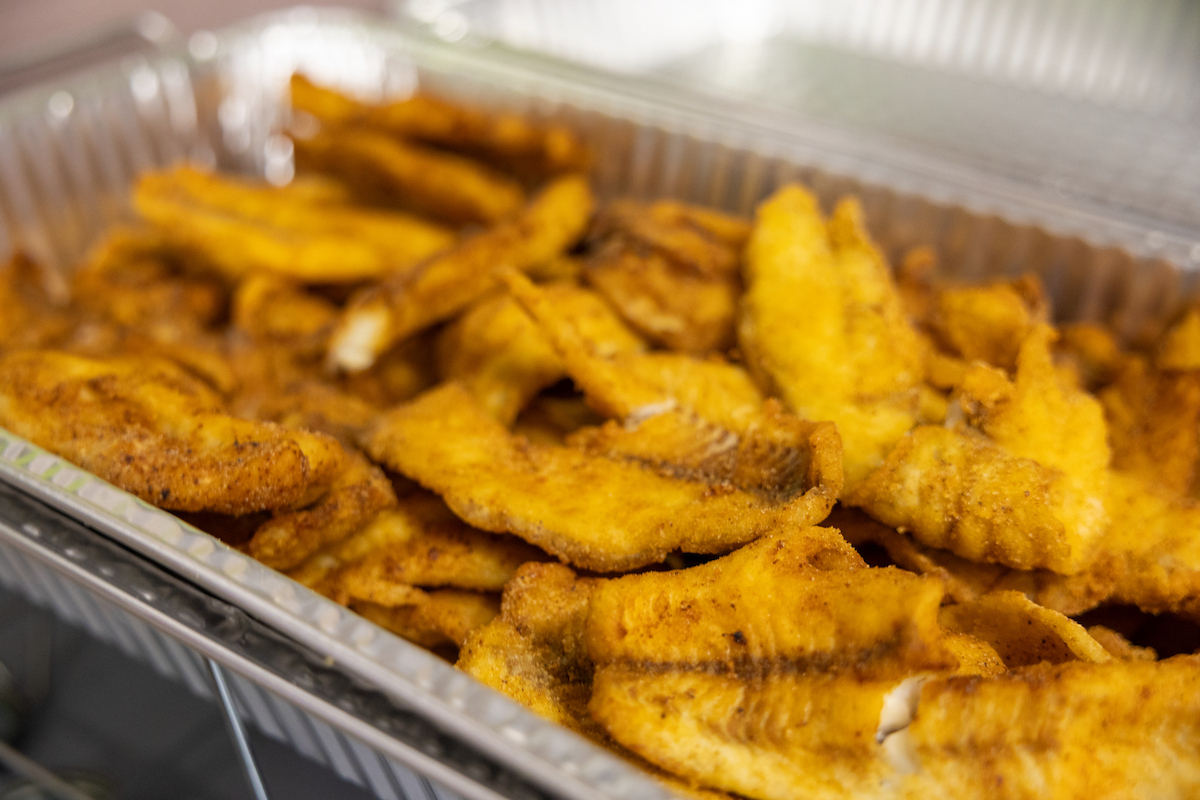
FRANKFORT, Ky. — Indoor-raised shrimp, bass, bluegill, and pawpaw ice cream and cake
helped tell Kentucky State University’s story on March 4, as more than 150 guests
gathered for the University’s Legislative Fish Fry and a firsthand look at how its
land-grant mission serves the Commonwealth.
Held in the Cooperative Extension Building, the event brought members of the Kentucky
House and Senate, agriculture leaders, industry representatives, and University partners
to campus for an evening centered on research, Cooperative Extension, workforce development,
and public service.
As Kentucky’s 1890 land-grant institution, Kentucky State used the gathering to spotlight
work that reaches well beyond campus. The program also reflected the Commonwealth’s
broader land-grant tradition through the participation of the University of Kentucky,
Kentucky’s 1862 land-grant university.
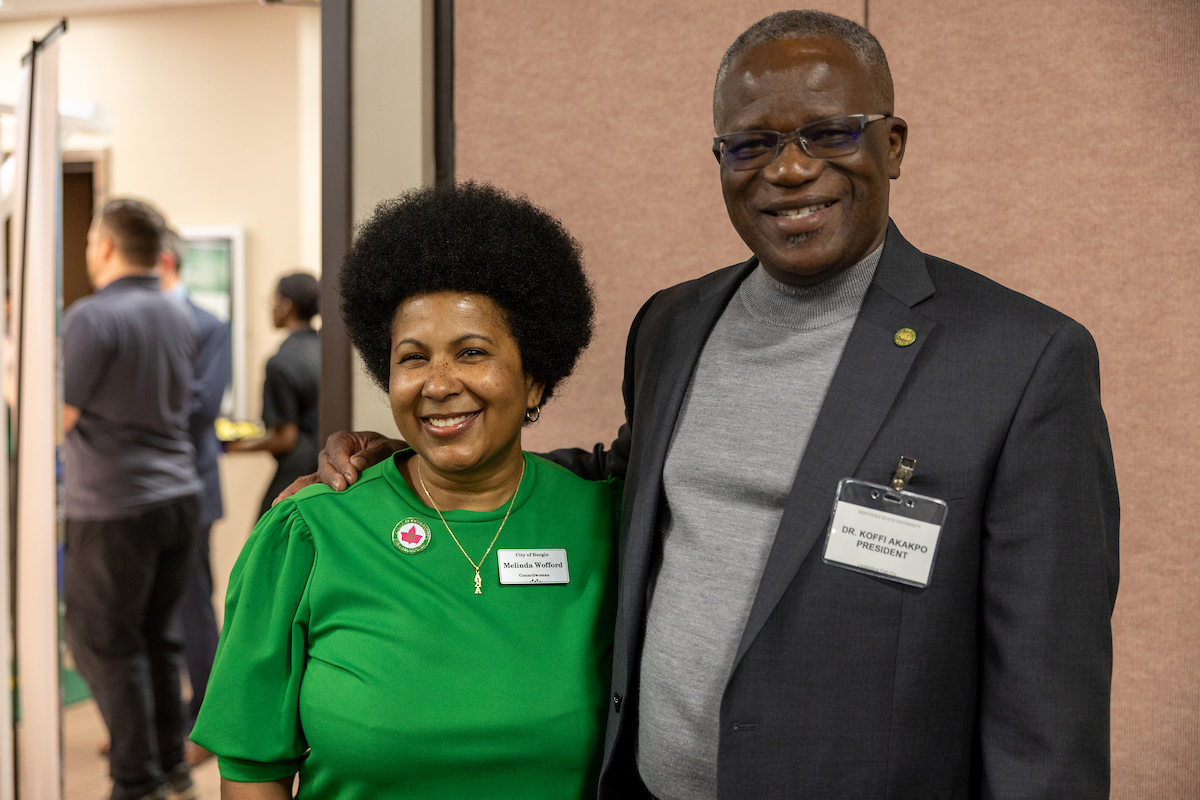
Program participants included Kentucky State President Dr. Koffi C. Akakpo; Dr. Andrew
Ray, chair of the School of Aquaculture and Aquatic Science; Dr. Laura Stephenson,
dean of the University of Kentucky Martin-Gatton College of Agriculture, Food and
Environment and vice president for land-grant engagement; Brett Connors, head blender
at Castle & Key Distillery; and Dr. Marcus Bernard, dean of the College of Agriculture,
Health, and Natural Resources and director of Land-Grant Programs, who served as master
of ceremonies.
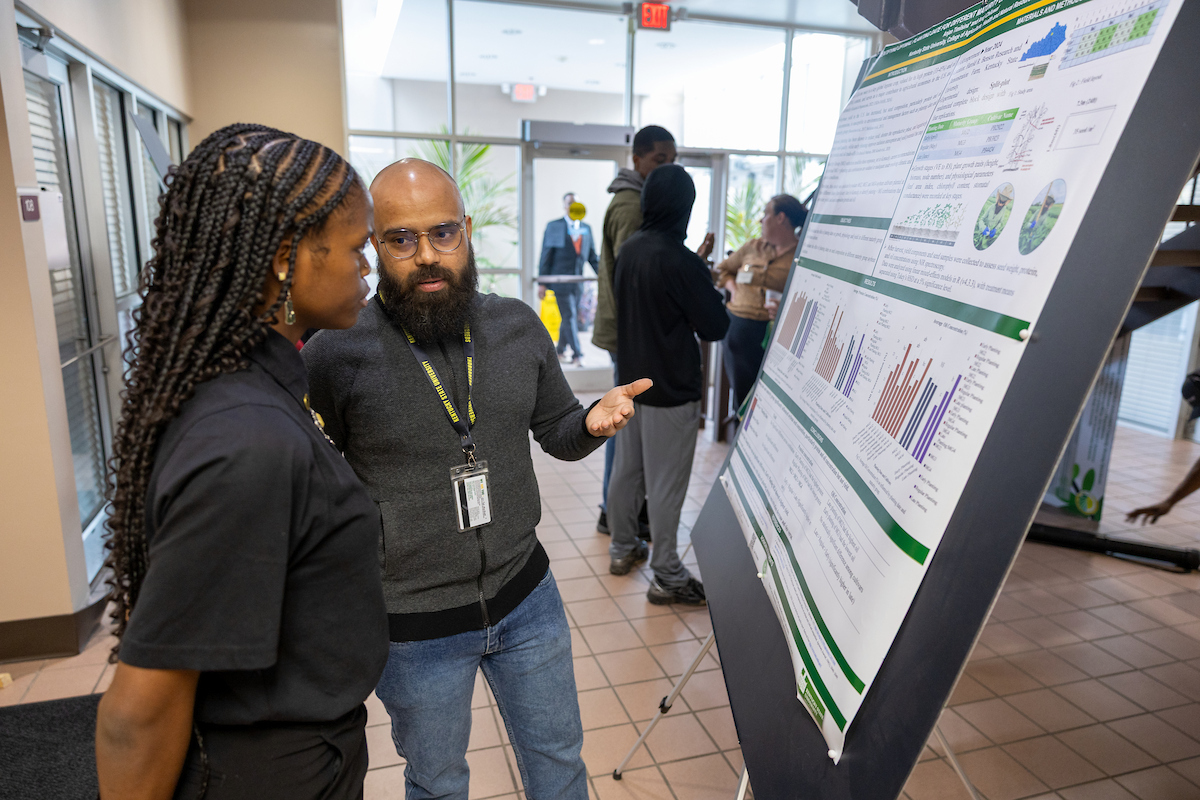
Students also shared research posters highlighting faculty-mentored projects, giving
guests an additional look at the University’s work in applied research and student
development.
Dr. Akakpo said the Legislative Fish Fry remains an important opportunity to bring
the University’s public-purpose work into clear view for policymakers and partners.
“As the Commonwealth’s 1890 land-grant institution, Kentucky State University has
a responsibility to serve beyond our campus boundaries,” Dr. Akakpo said. “The Legislative
Fish Fry allows us to welcome leaders to campus, share our progress, and demonstrate
how our work in education, research, and Extension creates value for Kentucky.”
That message was reinforced through an impact report shared with lawmakers in the
Kentucky General Assembly. The report highlighted the Hay Testing Lab in Glasgow,
$1.7 million in recent USDA Capacity Building Grants, newly approved degree programs
including the Bachelor of Science in Aquatic Science, and applied research and commercialization
tied to pawpaw products and fermentation and distillation.
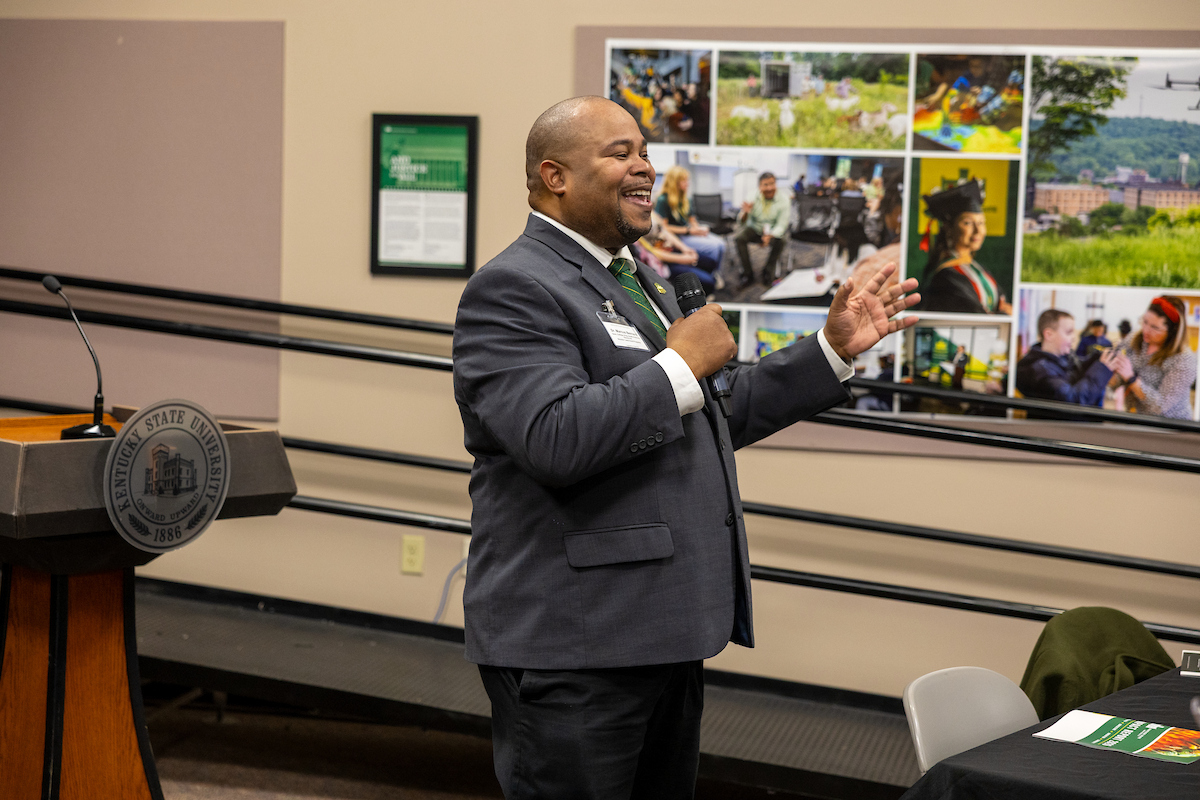
For Dr. Bernard, those examples reflected the practical reach of Kentucky State’s
land-grant mission.
“Those are not isolated accomplishments. They reflect what it means for a public university
to remain focused on service,” Dr. Bernard said. “Kentucky State University is translating
teaching, research, and Extension into outcomes that support producers, expand opportunity
for students, and strengthen communities across Kentucky.”
Dr. Stephenson emphasized the shared responsibility of Kentucky’s 1862 and 1890 land-grant
institutions to move innovation beyond campus and into farms, businesses, and communities
across the state, underscoring the value of continued collaboration in support of
agriculture and rural communities throughout the Commonwealth.
Aquaculture also featured prominently in the evening’s program. An economic impact
handout highlighted by Dr. Ray outlined the School of Aquaculture and Aquatic Science’s
role in fish health, conservation, aquaculture production, and workforce development
across Kentucky, including support for the Commonwealth’s $1.2 billion annual sport-fishing
industry.
The handout also showed that aquaculture directly supports more than 110 commercial
endeavors in Kentucky, including 53 pay lakes, seven licensed live haulers, and 56
aquaculture food producers statewide. Kentucky State has also helped install more
than 28 aquaculture systems in Kentucky high schools as part of its STEM and workforce
pipeline efforts.
The menu brought those connections to the table. Guests were served shrimp raised
indoors by Kentucky State’s School of Aquaculture and Aquatic Science, along with
farm-raised bass and bluegill from Mayer Fish Farm, with which Kentucky State has
partnered since 1999, before finishing the meal with pawpaw ice cream and cake.
Castle & Key Distillery also provided refreshments featuring its spirit products,
and Connors, the distillery’s head blender, recognized the strong partnership between
Castle & Key and Kentucky State while pointing to the value of the University’s fermentation
and distillation program in supporting talent development and innovation within one
of Kentucky’s signature industries.
The Legislative Fish Fry dates to 1988 and traces its origins to a period in the University’s
history when Dr. Harold R. Benson, Kentucky State’s longest-tenured Land-Grant director
and the namesake of the University’s 302-acre Research and Demonstration Farm, and
Dr. James Tidwell, chair of the Division of Aquaculture, helped lead a gathering primarily
centered on Kentucky legislators and their staff.
At that time, the Kentucky General Assembly held regular sessions in even-numbered
years, with more limited organizational sessions in odd-numbered years. In 2000, Kentucky
voters approved a constitutional amendment establishing annual regular sessions, and
the first odd-year regular session convened in 2001.
In 2004, under then-President Dr. Mary Evans Sias, the event evolved into a more public
annual gathering that included a broader cross-section of public servants and elected
officials beyond the Kentucky General Assembly. The Legislative Fish Fry remains a
distinctive Kentucky State University tradition and a continuing expression of the
University’s commitment to public service, partnership, and results that matter across
the Commonwealth.
Correction: An earlier version of this release incorrectly identified the Legislative Fish Fry
event history. University review of the event’s history indicates the event dates
to 1988. The story has been updated to reflect the revised historical information.