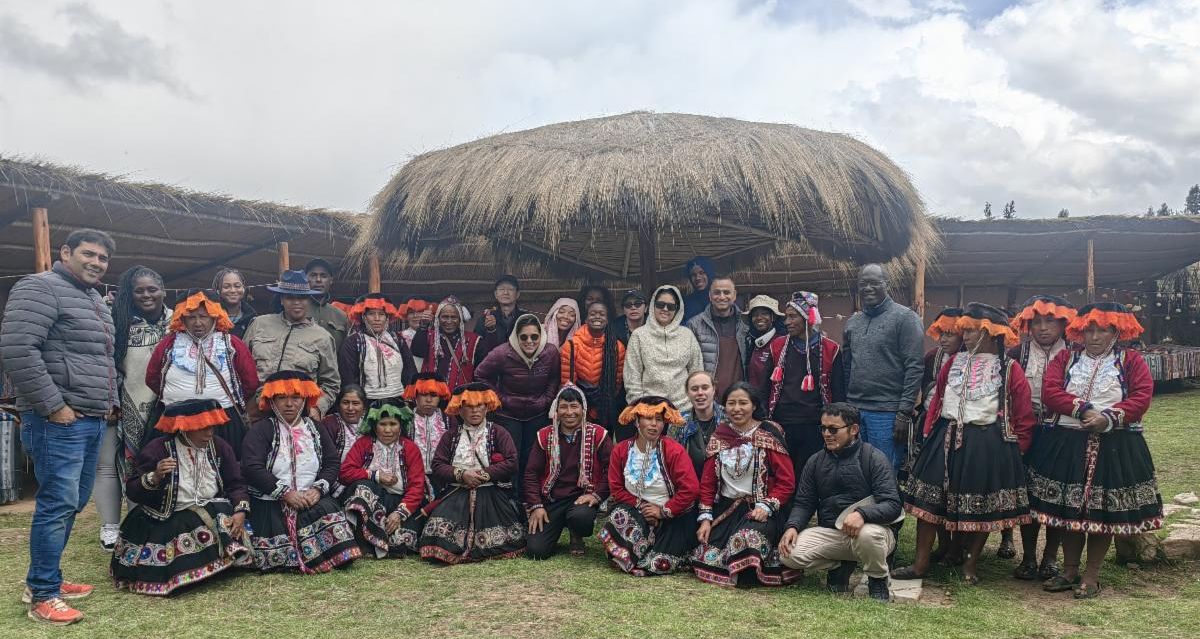
USDA NextGen experience blended fieldwork with food-systems learning.
FRANKFORT, Ky. — From cacao and coffee fields in Peru’s Cusco region to the terraced
agricultural landscapes of Machu Picchu and Moray, a Kentucky State University cohort
experienced how culture, ecology and commerce intersect across food systems. The itinerary
also included the Maras salt ponds — an example of community-managed production —
and Chinchero, where value-added textile production relies on natural fibers and dyes,
alongside lessons in sustainable cultivation of cacao, coffee, tea, medicinal plants
and native crops.
Eleven Kentucky State students took part in the 11-day experiential learning program
in Peru from Dec. 13-23, 2025. Supported by the U.S. Department of Agriculture’s NextGen
initiative, the experience brought classroom concepts into focus through site-based
learning across Lima, Cusco, Ollantaytambo, the Sacred Valley and rural agricultural
communities, with emphasis on commercial agriculture, trade, food safety, and sustainable
farming.
 The Kentucky State delegation included Dr. Buddhi Gyawali, professor of geospatial
applications, human dimensions and climate studies; Dr. Maheteme Gebremedhin, chair
of the School of Agriculture and Natural Resources; and Dr. Paloma Pinillos, international
and community partnerships administrator in the Office of Global Strategies and International
Affairs. Students and faculty from three NextGen partner HBCUs — Lincoln University,
the University of Maryland Eastern Shore and Florida A&M University — also joined
the program.
The Kentucky State delegation included Dr. Buddhi Gyawali, professor of geospatial
applications, human dimensions and climate studies; Dr. Maheteme Gebremedhin, chair
of the School of Agriculture and Natural Resources; and Dr. Paloma Pinillos, international
and community partnerships administrator in the Office of Global Strategies and International
Affairs. Students and faculty from three NextGen partner HBCUs — Lincoln University,
the University of Maryland Eastern Shore and Florida A&M University — also joined
the program.
The Kentucky State students brought an interdisciplinary mix of majors, including
biology; agriculture, food, and environment; agricultural business; computer science;
manufacturing engineering; and environmental sciences.
A central site for immersive learning was El Mangal in Maranura, owned and operated
by the Figueroa family, where hands-on modules focused on organic cacao and coffee
production. Field days included identifying plant varieties, harvesting cacao pods
and coffee cherries, and examining how cultivation choices influence quality, sustainability
and market value.
Post-harvest work followed, including fermentation and drying techniques. Using traditional
tools, the group roasted and ground cacao and prepared cacao beverages and coffee
through multiple brewing methods. Sensory activities linked agricultural processes
to aroma, flavor and texture—connecting production decisions to consumer experience
and larger food systems.
 Conservation was part of the fieldwork as well, with the cohort planting native cacao
trees and discussing the relationship between agricultural practice, environmental
stewardship and long-term sustainability.
Conservation was part of the fieldwork as well, with the cohort planting native cacao
trees and discussing the relationship between agricultural practice, environmental
stewardship and long-term sustainability.
Beyond El Mangal, the program blended place-based learning with community engagement.
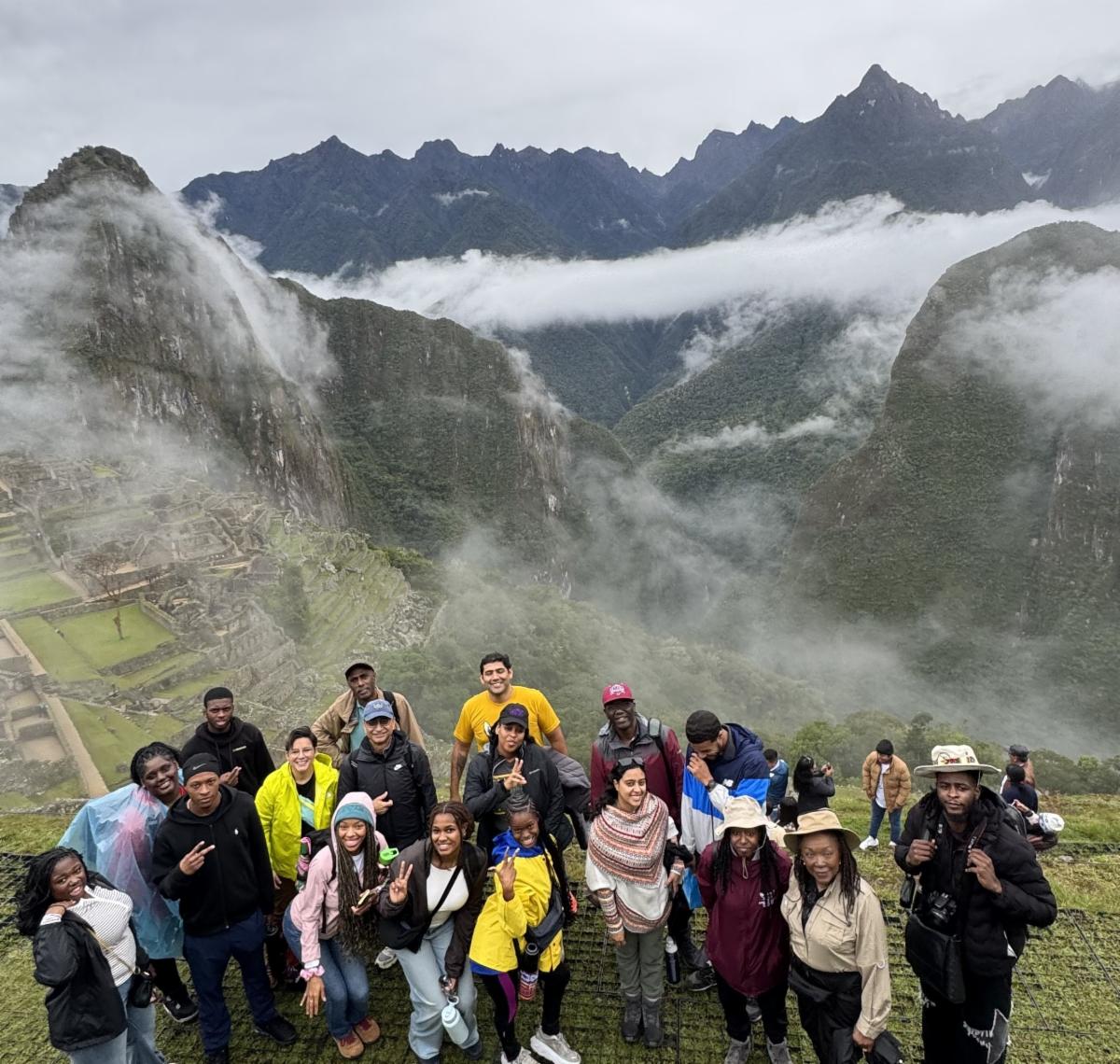
In the Sacred Valley, Machu Picchu and Moray provided a close look at Inca agricultural
innovations, where terraces and microclimates illustrate strategies for resilience
and climate adaptation. At the Maras salt ponds, the group examined community-managed
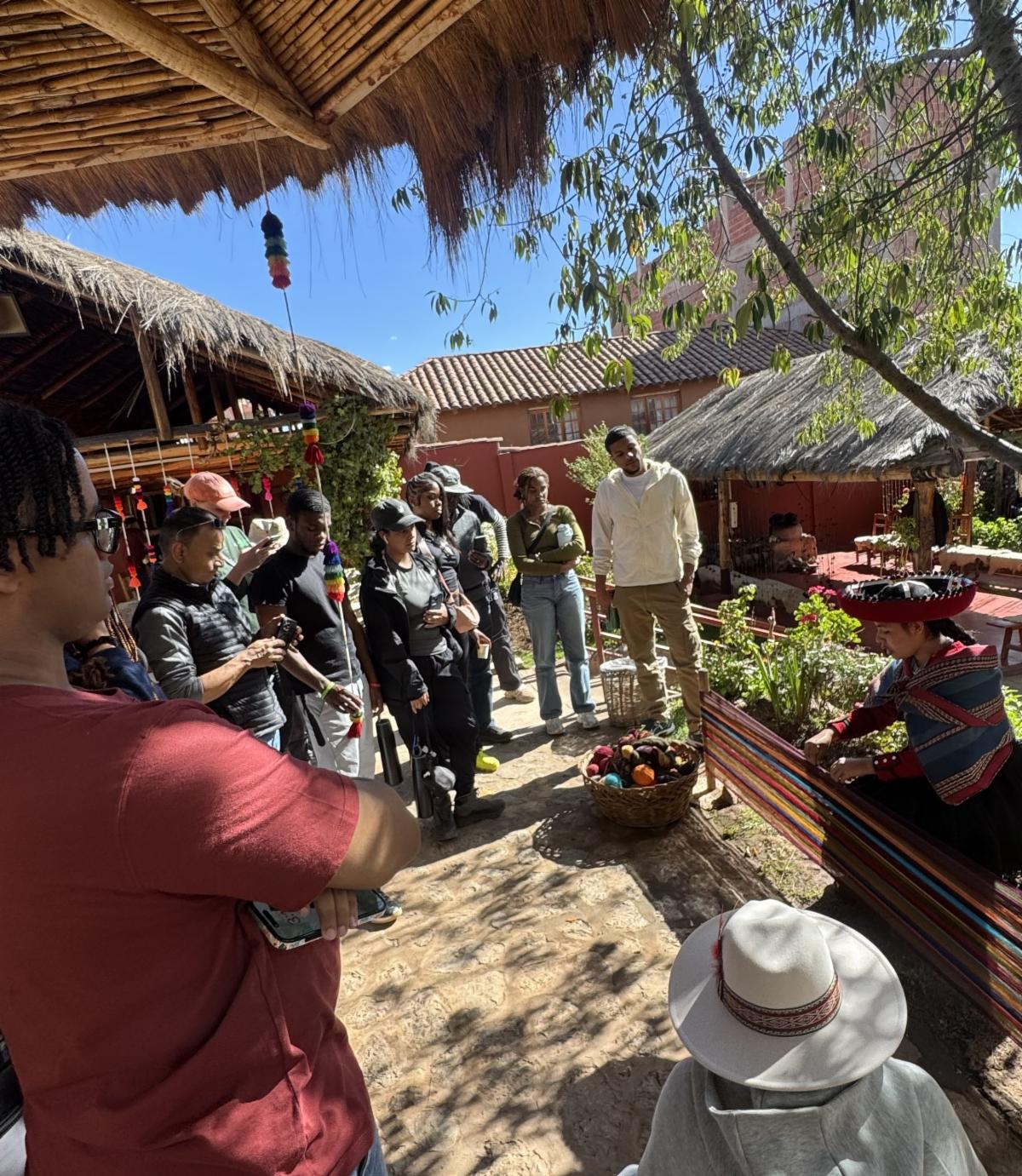
production and small-scale quality control. In Chinchero, workshops connected agriculture
to value-added textile production using natural fibers and dyes.
The itinerary also included learning rooted in local agricultural tradition, including
the responsible, educational study of coca cultivation and use within its historical
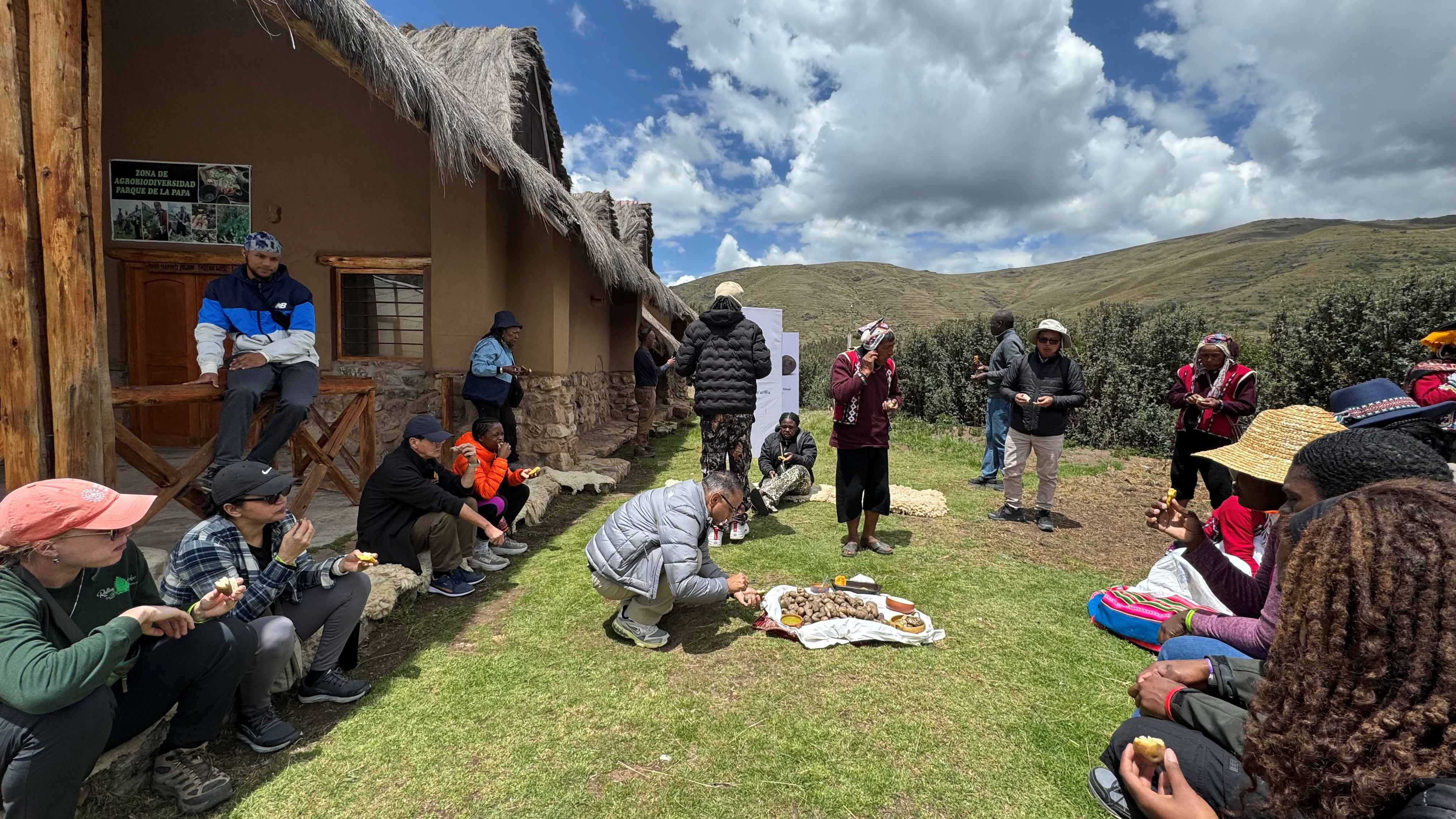
context. At Potato Park, the cohort observed 1,400 preserved potato cultivars and
examined community seed systems and agrobiodiversity conservation — an example of
how Indigenous knowledge supports food security and climate resilience.
In Lima, the group visited Universidad Nacional Agraria La Molina, touring facilities
and learning about work underway in laboratories focused on soil chemistry, soil mapping
and geospatial analysis for agriculture, along with the entomology museum “Klaus Raven
Muller.” Kentucky State maintains an active partnership with the institution that
supports exchange opportunities such as study abroad programs, research collaboration,
internships and academic mobility.
For many in the cohort, the experience reshaped how food systems are understood —
and how professional purpose can be clarified through immersion.
“This experience gave me an enormous amount of important context about the production and trade of certain food products,” one student said. “It prompted me to be more intentional about the food I buy, helped me understand how environmental priorities differ across cultures, and gave me tools to think more critically about U.S. agricultural practices and how to improve them.”
Another student emphasized the value of intercultural learning and collaboration across
institutions. “We met local farmers, learned their agricultural practices, and built
connections with peers from other universities,” the student explained. “It strengthened
both my academic knowledge and my professional network.”
A third student described the experience as both academic and personal. “Exploring
agriculture firsthand through the herbal tour and coffee workshop helped me understand
how local farmers grow and produce their food,” the student shared. “Everything was
fresh and intentional. It helped me reconnect with my purpose and inspired me to bring
home healthier habits and new knowledge.”
Dr. Pinillos underscored the program’s impact on professional growth and cultural
understanding. “This experience was truly eye-opening for our students in terms of
research, professionalism and cultural understanding,” Dr. Pinillos observed. “They
gained a deeper appreciation for how Peruvian agricultural communities are revitalizing
and reapplying Indigenous knowledge systems to preserve cultural heritage, strengthen
food systems and improve quality of life.”
The Peru program marked the fourth international trip supported by the NextGen project.
In 2024–2025, Kentucky State sent 21 students to the U.S. Virgin Islands, Rwanda and
Nepal. Dr. Gyawali noted that the experiences broaden students’ understanding of global
agriculture and food security while helping inform research, outreach and curriculum
development in the United States through USDA Award No. 2023-70440-40145.