Lab Activities
By Seema Adhikari, Graduate Student
|
From the Field | Understanding Soil Recovery in Eastern Kentucky
The coal-mined region of Eastern Kentucky tells a vivid story of both natural beauty and human impact. From July 5 to July 10, 2026, I and our research team traveled to reclaimed mine lands and nearby undisturbed forest sites to collect soil samples and better understand how soils recover after mining. Sampling across these contrasting landscapes was challenging, but it allows us to directly compare the physical and chemical properties of reclaimed and natural soils.
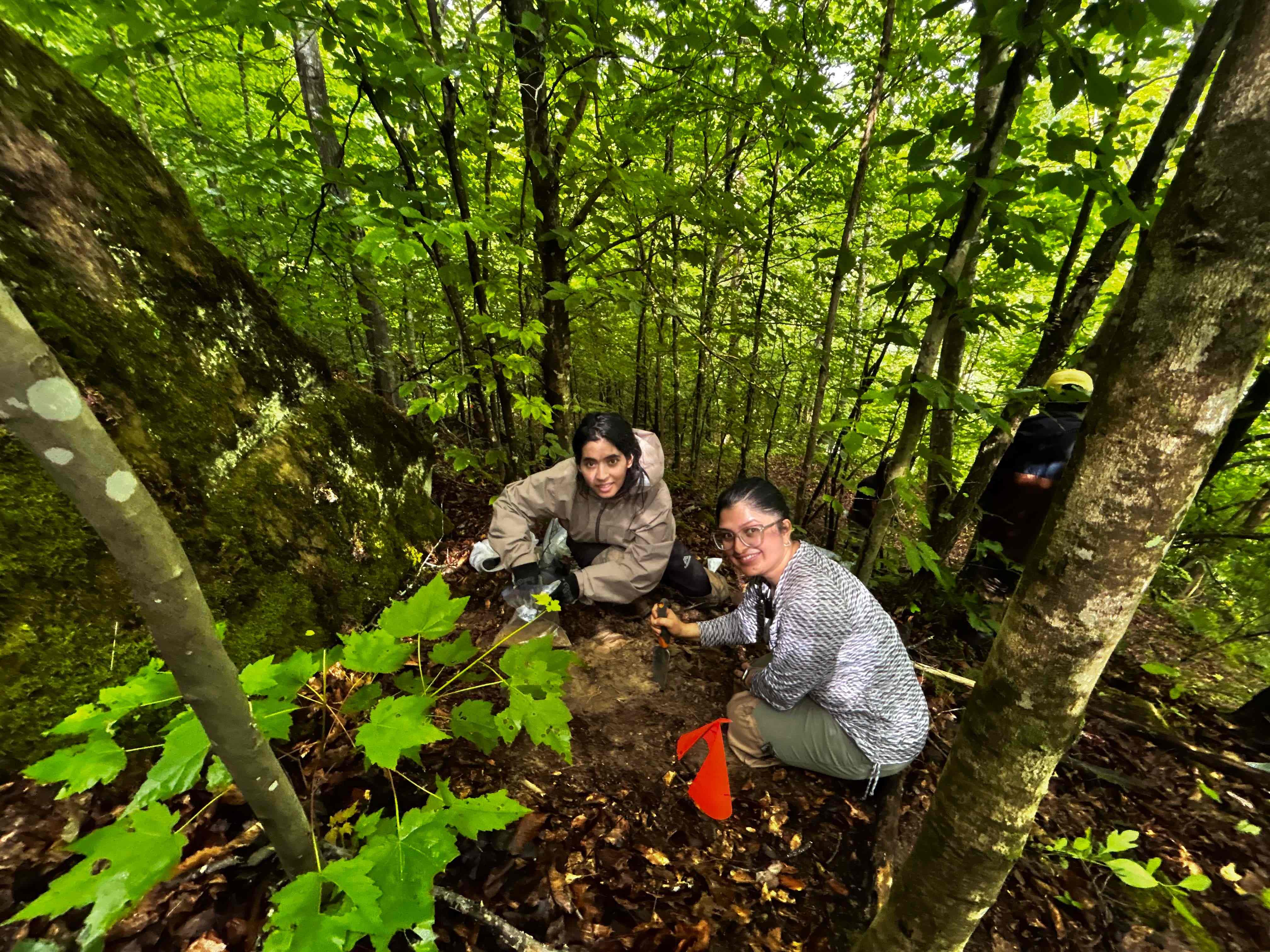
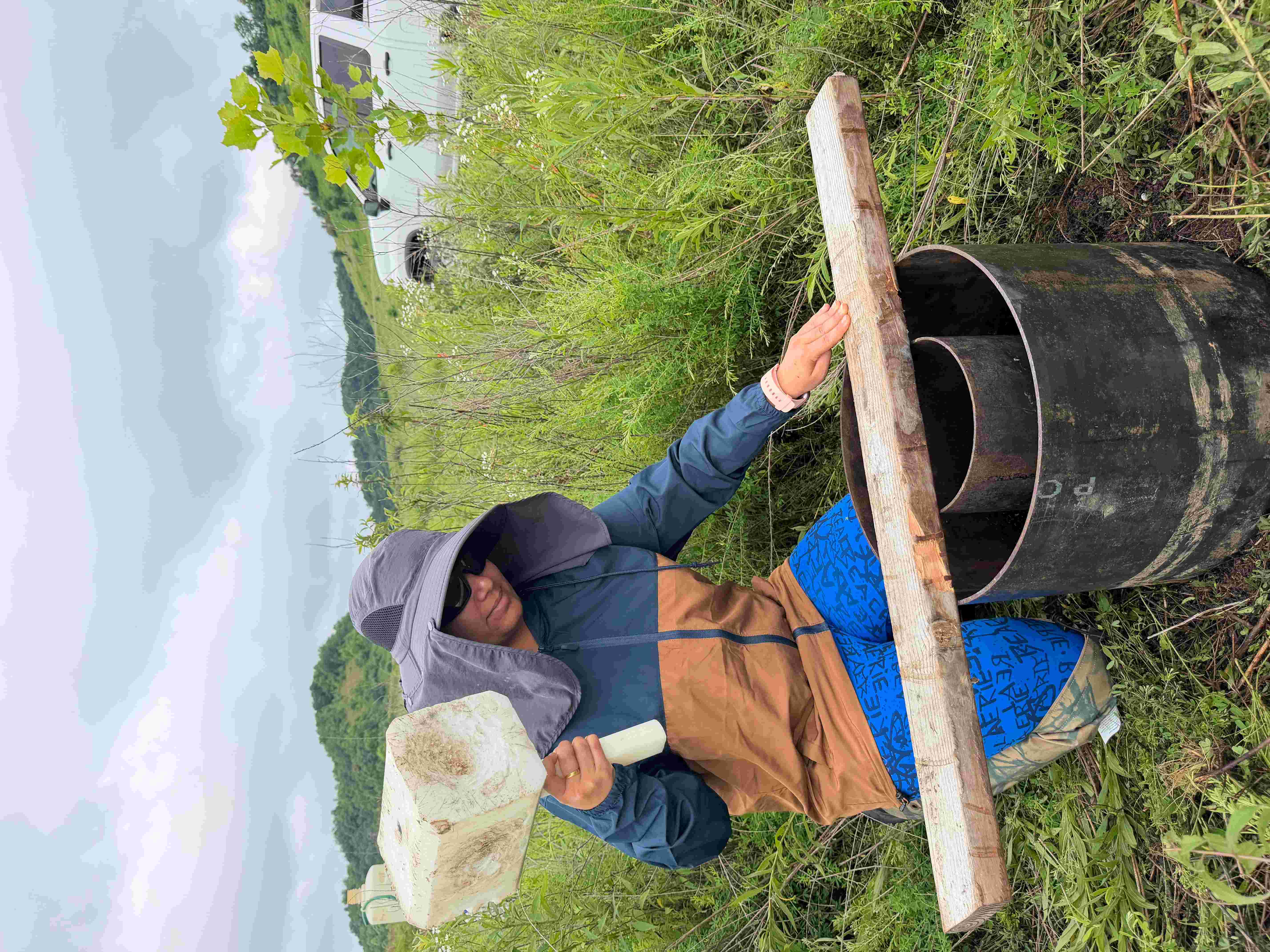
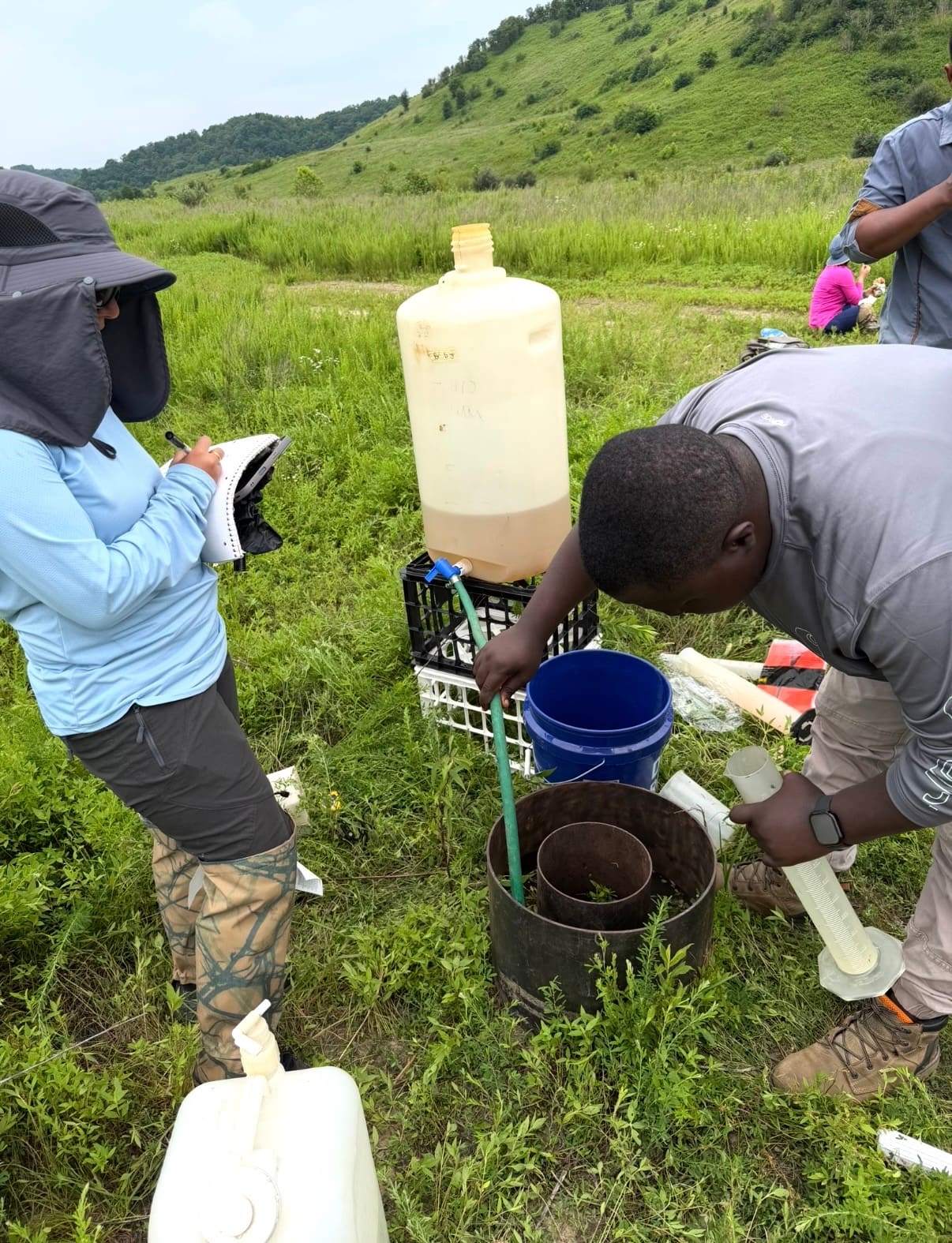
Digital Data Collection with ArcGIS Survey123 Team members collecting a soil sample at an undisturbed forest site. Throughout the field campaign, we used ArcGIS Survey123, a digital data collection tool, to record field observations efficiently and accurately. The survey captured the GPS coordinates of every sampling location, creating a precise geospatial record of our work. I designed the survey questions so team members could consistently document key site characteristics such as soil texture, vegetation type, and land use. Using Survey123 improved data accuracy, standardized collection across all sampling sites, and made it easy to integrate our field data into GIS for further spatial analysis. Measuring Infiltration and Bulk Density Driving the double-ring infiltrometer into the ground and filling the infiltrometer rings from a water reservoir while recording infiltration readings. Alongside soil sampling, we measured water infiltration at the mine sites using a double-ring infiltrometer and collected samples for bulk density. Infiltration shows how easily water moves through the soil, while bulk density indicates how compacted the soil has become. These measurements are especially valuable because no infiltration data had previously been recorded at these sites. Significance Once analyzed, these data will provide important indicators of soil health and help evaluate how effective land reclamation has been, including its potential to support vegetation, improve water retention, and restore ecosystem functions. Every sampling point is a window into how the landscape is recovering.
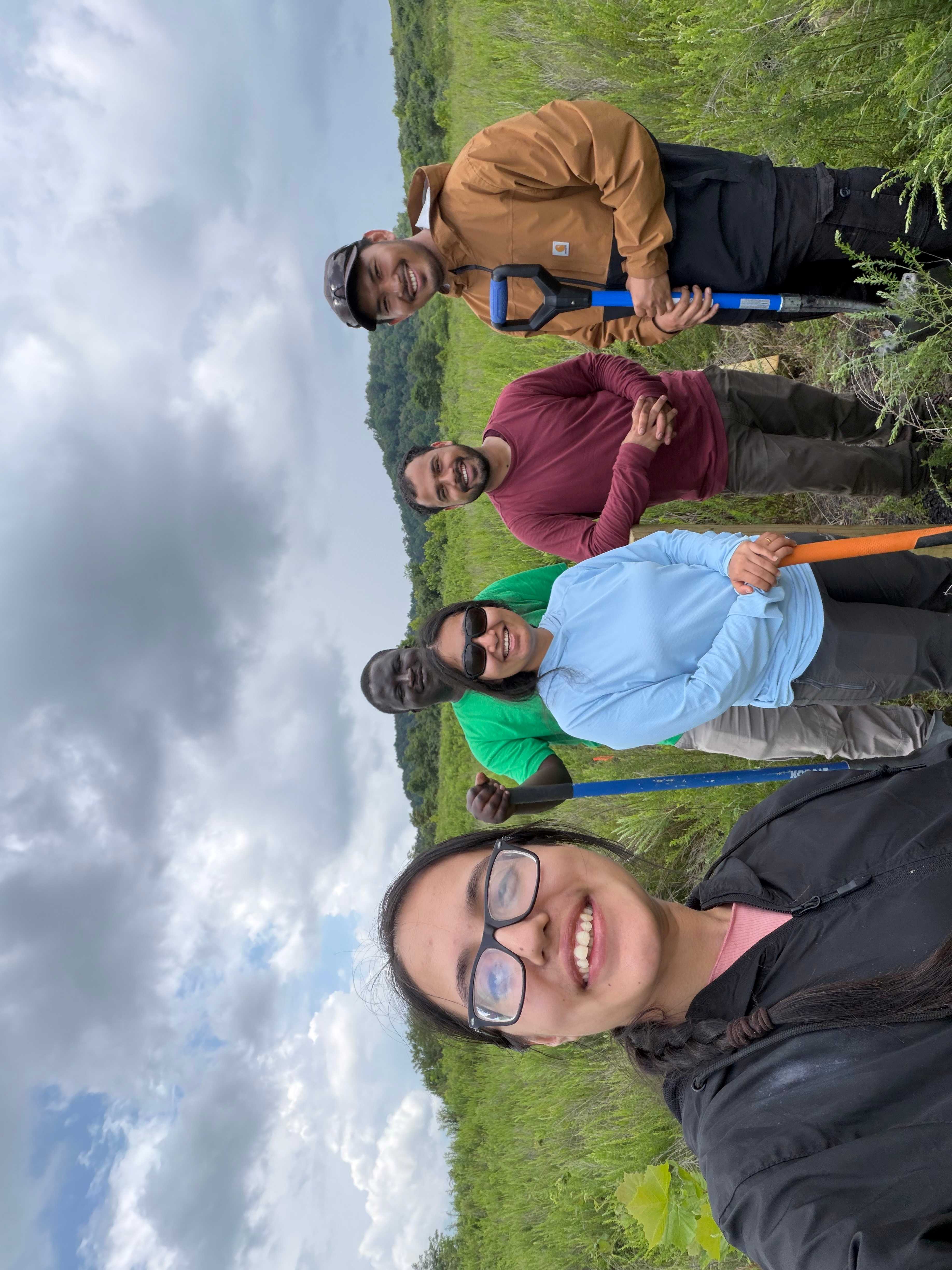
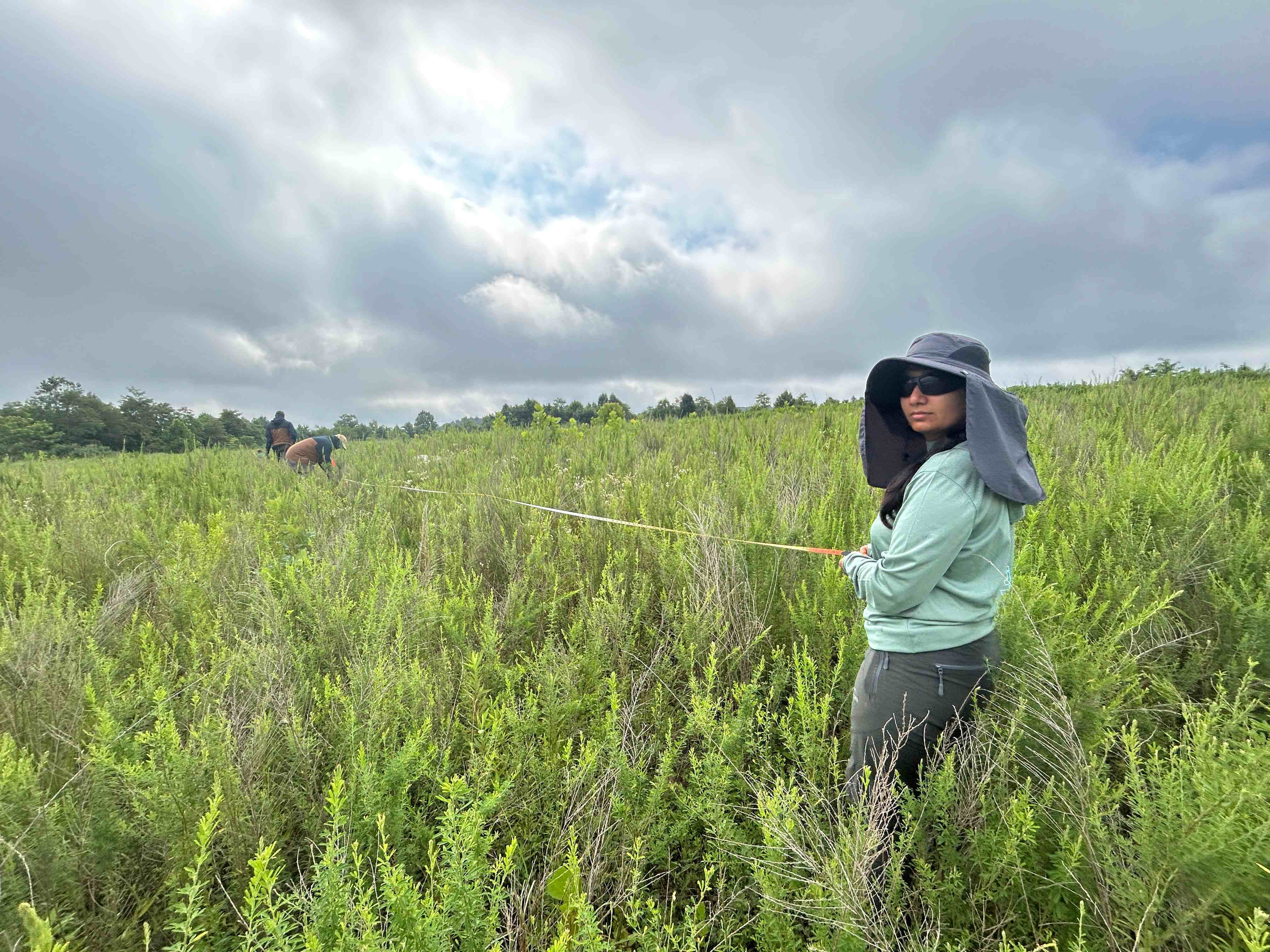
Laying out sampling points across a reclaimed grassland site. Combining field observations with laboratory analysis, this study will generate data that can guide future reclamation efforts and promote sustainable land management across Appalachia. I am excited to continue this work and share findings that will help build more resilient reclaimed landscapes for future generations. |