Meeting emphasizes strengthening families, ensuring food quality and access, and improving the health of Kentuckians
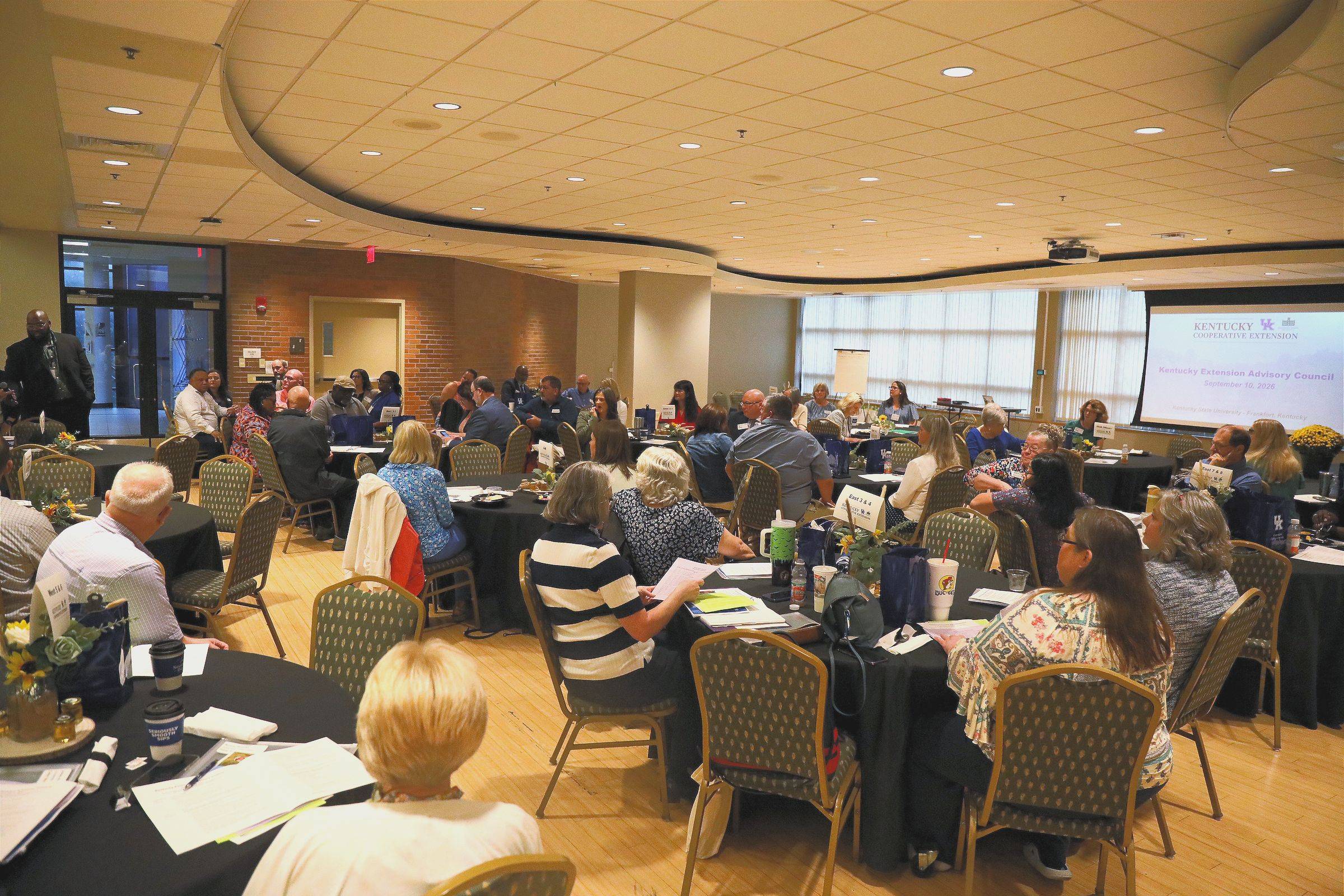
FRANKFORT, Ky. — Kentucky State University hosted the Kentucky Extension Advisory Council on Sept. 10, bringing Extension professionals and volunteer leaders together to share their work and consider how Cooperative Extension can better serve the Commonwealth through 2030.
The summer meeting at the Carl McClellan Hill Student Center centered on the theme “Strengthening Families, Ensuring Food Quality and Access, and Improving the Health of Kentuckians.”
Colleagues from Kentucky State and the University of Kentucky presented programs addressing those priorities in communities across Kentucky. Council members then drew on the presentations and their knowledge of local needs to discuss Extension’s future direction.
 “Cooperative Extension represents the land-grant mission in action,” Kentucky State
President Dr. Koffi C. Akakpo told the council. “Through the shared efforts of Kentucky
State University, the University of Kentucky, local partners, and Extension professionals,
research and practical knowledge reach people where they live and work.”
“Cooperative Extension represents the land-grant mission in action,” Kentucky State
President Dr. Koffi C. Akakpo told the council. “Through the shared efforts of Kentucky
State University, the University of Kentucky, local partners, and Extension professionals,
research and practical knowledge reach people where they live and work.”
“Your knowledge of local needs is essential to Extension’s success,” Dr. Akakpo added.
“Your counsel helps ensure that programs across the Commonwealth remain responsive
to the people and communities we serve.”
Council President Jeff Zinner guided the meeting and moderated its question-and-answer session. Dr. Tyrell Kahan, associate Extension administrator for Kentucky State’s Cooperative Extension Program, joined Dr. Jennifer Hunter, UK’s associate vice president for land-grant engagement and associate dean and director of Cooperative Extension, for administrative updates and dialogue.
Dr. Marcus Bernard, dean of Kentucky State’s College of Agriculture, Health, and Natural Resources and director of land-grant programs, and Dr. Laura Stephenson, vice president for land-grant engagement and dean of UK’s Martin-Gatton College of Agriculture, Food, and Environment, also addressed the council, underscoring the statewide reach of the two institutions’ shared Extension mission.
Kentucky State’s Cooperative Extension Program advances that mission through four program areas: Community Resource Development, Agriculture and Natural Resource, 4-H Youth Development, and Family and Consumer Sciences. The agenda showed how those areas intersect and how work in one area can strengthen outcomes in others.
Presentations related to families and young people connected kindergarten readiness, environmental education, youth development, and health. Dr. David Weisenhorn, senior Extension specialist for parenting and child development at UK, discussed kindergarten readiness programming through Extension. Louis Ross, manager of Kentucky State’s Environmental Education and Research Center, shared the University’s work in environmental education. Julia Branstetter, a UK 4-H Extension specialist in youth work and life readiness, presented 4-H Health Rocks, connecting youth development with health and well-being.
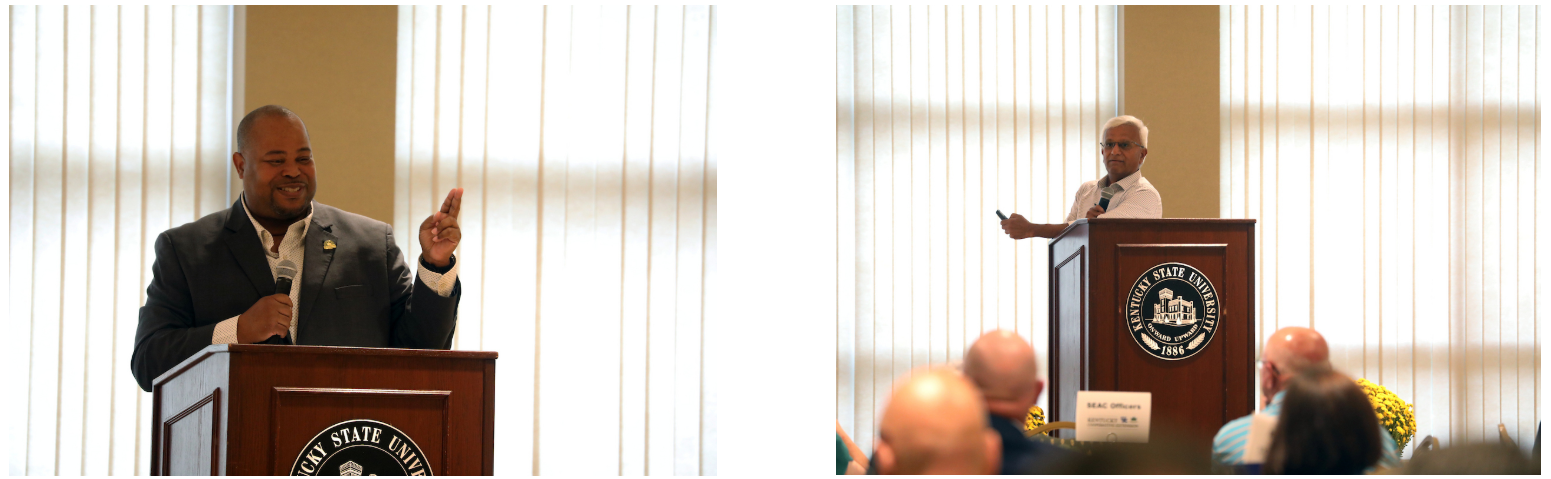
The food-focused presentations extended from production systems and food safety to local food networks and hands-on learning. Dr. Avinash Tope, Kentucky State’s associate dean for research and an associate professor, discussed food safety in aquaponic and hydroponic systems. Dr. Ashton Potter, executive director of The Food Connection and director for local food systems in UK Cooperative Extension, shared work supporting local food systems. Cora Teets, a research and Extension associate at Kentucky State, presented work from the University’s Urban Agriculture Student-Run Farm.
The health segment illustrated the range of ways Extension can meet people in their communities. Alethea Bernard, Kentucky State’s state specialist for health, presented “Start Where People Are: Food, Voice and the Power to Shape Our Health.” Nick Roy, the UK agriculture and natural resources Extension agent in Adair County, discussed Agriculture Community QPR. Question, Persuade, and Refer is a suicide prevention training that prepares everyday people to recognize warning signs, respond to someone in crisis, and connect that person with appropriate support.
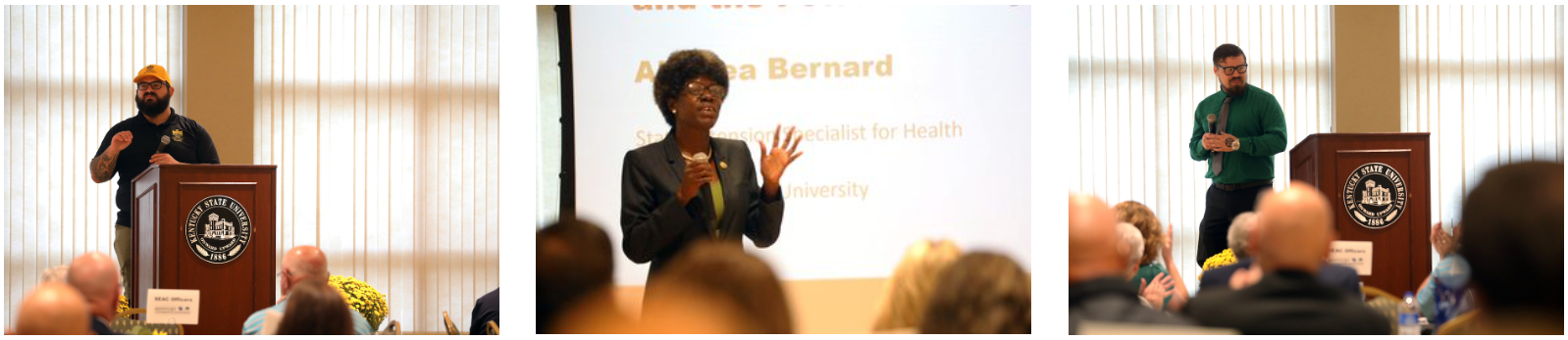
Other presentations focused on expanding access through direct service and institutional partnerships. Cody Crockett, Kentucky State’s Mobile Health Unit coordinator, shared the unit’s work across the Commonwealth. Chlodys Johnstone, UK’s assistant dean for Extension health partnerships, discussed the role of partnerships in expanding Extension’s health-related work.
Placing programs from Kentucky State and the University of Kentucky within the same conversation allowed participants to compare approaches, identify connections, and consider how institutional and local partnerships can extend the reach of the work.
The afternoon shifted from sharing current programs to setting future priorities. Council members formed discussion groups focused on Family and Youth Development, Food Quality, Security, and Access, and Health and Wellbeing. Each group considered the question, “What would you like to see Extension accomplish by 2030?”
That discussion reflected the council’s central role in connecting community perspectives with statewide Extension planning.
By bringing local perspectives, university expertise, and practical Extension experience together, the meeting demonstrated the value of cooperation in strengthening families, improving access to quality food, and advancing the health of Kentuckians.