Lead author Basanta Neupane adds to a growing body of research on soil management
and crop safety from Dr. George F. Antonious’s laboratory
A familiar garden crop could have a role in addressing soil contamination. Research
at Kentucky State University suggests hot peppers can absorb certain metals from soil,
with concentrations in the harvested hot pepper fruits remaining below the limits
cited in the study.
Basanta Neupane, the paper’s lead author, conducted the research through the University’s Chemistry and Environmental Toxicology Laboratory under the guidance of Dr. George F. Antonious, professor of agriculture in the College of Agriculture, Health, and Natural Resources. Neupane’s graduate research has focused on using plants to address environmental contaminants and examining how organic soil amendments affect crop yield and quality.
 “We wanted to understand how different soil treatments influence the movement of metals
into hot peppers,” Neupane said. “That means looking at the crop’s potential to absorb
those metals and measuring what accumulates in the part people eat.”
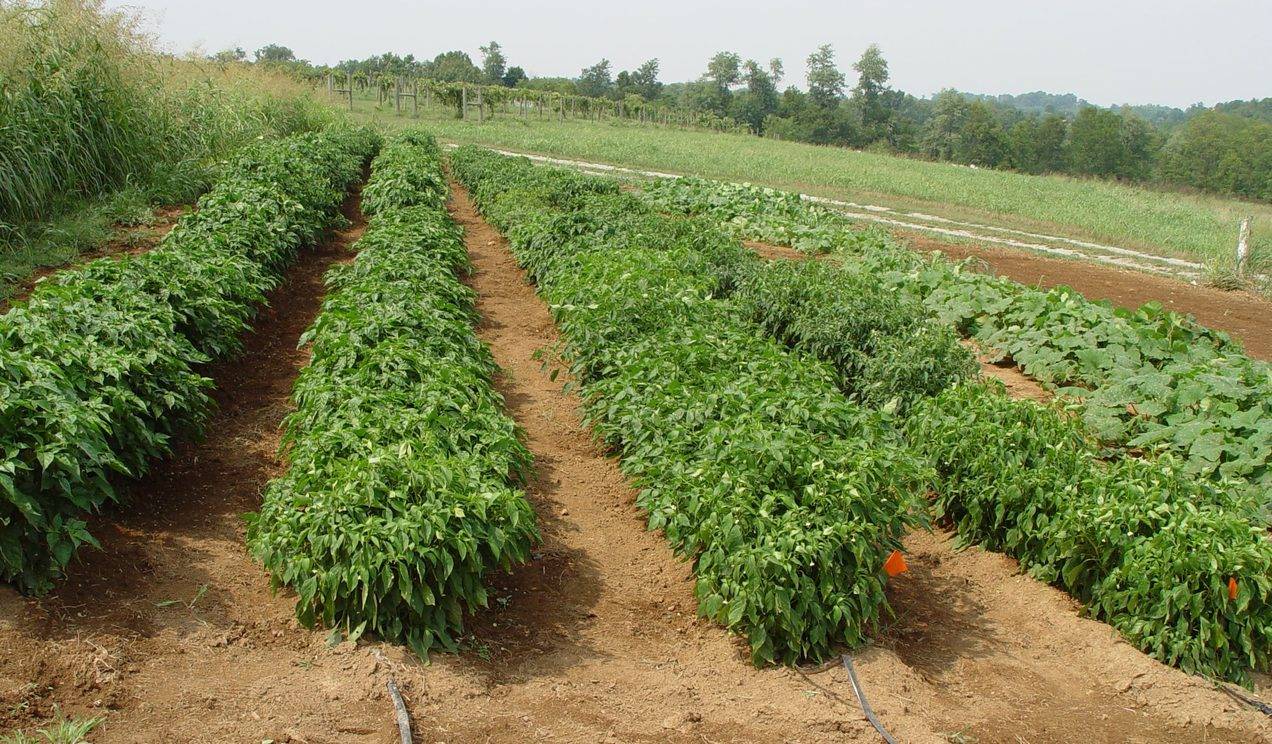
Published in Environmental Pollution and Management, the study examined Georgia Flame hot peppers grown under several soil treatments. Neupane contributed to the study’s design and methodology, performed the formal analysis, and prepared the original manuscript.
Heavy metals persist in the environment because they do not biodegrade. The researchers investigated phytoremediation, a process that uses plants to absorb or stabilize contaminants, as a potential approach to managing those metals.
For the field experiment, the team compared unamended soil with treatments including vermicompost, commercial fertilizers, sewage sludge, chicken manure, and horse manure. Researchers also tested the treatments with biochar, a porous, charcoal-like material produced by heating biomass with little oxygen.
Fieldwork took place at the University of Kentucky’s South Farm in Lexington. Soil and hot pepper fruit samples were then analyzed at Kentucky State to measure metal concentrations and compare uptake across treatments.
The peppers showed potential to extract cadmium, nickel, copper, and zinc. Combining biochar with other amendments increased the uptake of some metals, demonstrating that materials added to soil can influence how readily those elements move into plants.
Metal concentrations in the harvested peppers remained below the permissible limits used in the analysis, according to the research findings. Those findings reflect the crop and growing conditions tested.
Because the study covered one growing season, researchers recommended multiyear trials across different seasonal and climatic conditions. Additional measurements of plant growth and yield would help assess the approach over time.
 Dr. Antonious’s laboratory has developed a growing research portfolio examining connections
among soil management, environmental quality, and crop nutrition. In four other recent peer-reviewed studies, the team investigated biochar, soil enzymes, metal uptake in potatoes, crop nutrition,
and agricultural technology. Neupane contributed to that work, including research
on soil remediation and a paper on agricultural applications of radioisotopes.
By examining hot peppers, the team extends its investigation of how soil amendments and crop selection interact—questions relevant to the University’s 1890 land-grant mission of advancing agricultural knowledge and addressing producers’ needs.
“Each study helps us better understand the relationship between soil management, crop performance, and environmental quality,” Dr. Antonious said. “Graduate researchers such as Basanta contribute directly to that work, developing the skills to investigate practical agricultural problems and share their findings.”
Co-authors are Dr. Antonious; Dr. Mohammad H. Dawood of the University of Telafer in Iraq, who earned his Ph.D. at the University of Kentucky; and Kentucky State graduate assistant Anjan Nepal.
Support for the research came from the U.S. Department of Agriculture’s National Institute of Food and Agriculture through Evans–Allen research funding, Project No. KYX-10-23-80P, Accession No. 7005611. The program supports agricultural research at 1890 land-grant institutions.
Read the full study.